
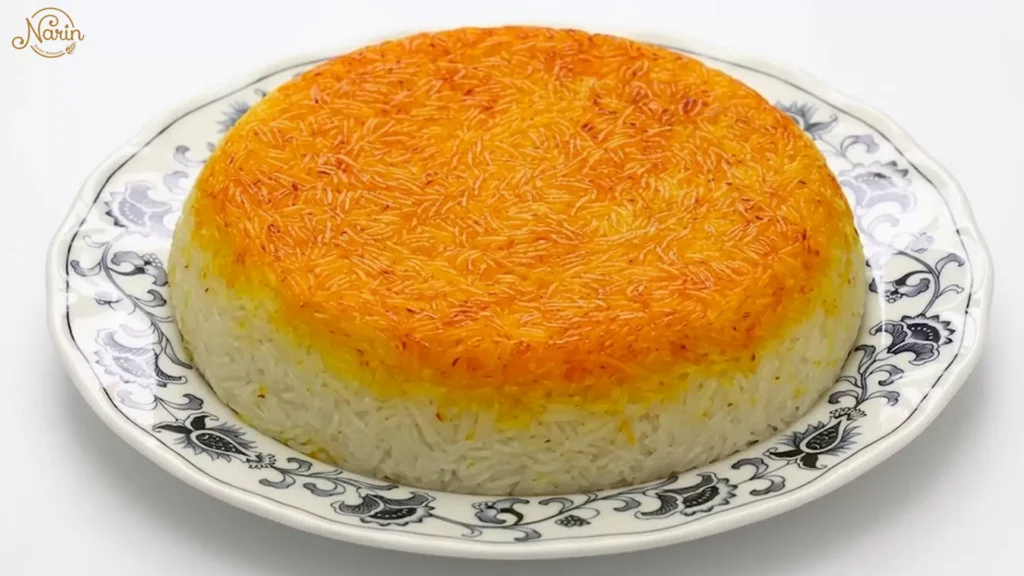
Hearing a golden crust crack at the dinner table builds instant anticipation. Cooking rice is an everyday task for many, but Iranian kitchens take a different approach. They focus on precise heat management and patience to build texture rather than just boiling a staple side dish. Achieving a fluffy grain alongside that signature bottom crust takes time. Because the preparation is heavy, many Sydney locals search for “tahdig near me” to skip the hard work and just enjoy the meal.
If you want to try this technique at home, this guide breaks down the exact steps to get it right.
The Foundation of Authentic Persian Rice
Rice forms the base of the Iranian dining table. If you find yourself asking, “what is Persian food?”, you have to start with the rice. Forget sticky or clumped varieties.
Persian rice must stay separate, light, and aromatic. The raw ingredients dictate the final result. While many assume Basmati is the standard, true Iranian kitchens rely on premium long-grain rice grown in Northern Iran, near the Caspian Sea. Varieties like Tarom, Hashemi, or Sadri are the absolute benchmark. Their unique natural structure keeps the grains firm, perfectly separated, and highly aromatic during cooking.
You start with a patient washing phase. Rinse the rice three to five times in cold water. Gently agitate the grains with your hands. You want to strip away surface starch, the main cause of stickiness. Stop washing once the water drains clear.
Next, the grains need to soak. Rest the rice in lukewarm, heavily salted water for one to two hours. Salt strengthens the grain structure. This stops the rice from splitting and turning mushy in boiling water.
Parboiling: Boiling the Grains
Bring your pot to a rolling boil before adding the rice. Dropping soaked rice into the water lowers the temperature naturally. Keep the burner on high to bring it back to a boil fast. This parboiling phase lasts just five to eight minutes.
You want the grain soft on the outside but firm in the centre. Press a single grain between your thumb and index finger. If the outside squashes but the core resists, drain it immediately. Move the rice to a colander and rinse with lukewarm water to stop the cooking process.
Chef’s Note: Managing the Salt
The boiling water should taste aggressively salty, much like seawater. Do not worry about over-salting. Most of it washes away during draining. This boiling window is your only chance to season the inside of the grains.
How to Make Tahdig: The Golden Crust Formula
The best part of the meal is the crispy layer at the bottom of the pot. Anyone wondering how to make tahdig needs to master heat control and use the right pot. A heavy-bottomed, non-stick pot such as Teflon, ceramic, or coated cast iron makes release easy.
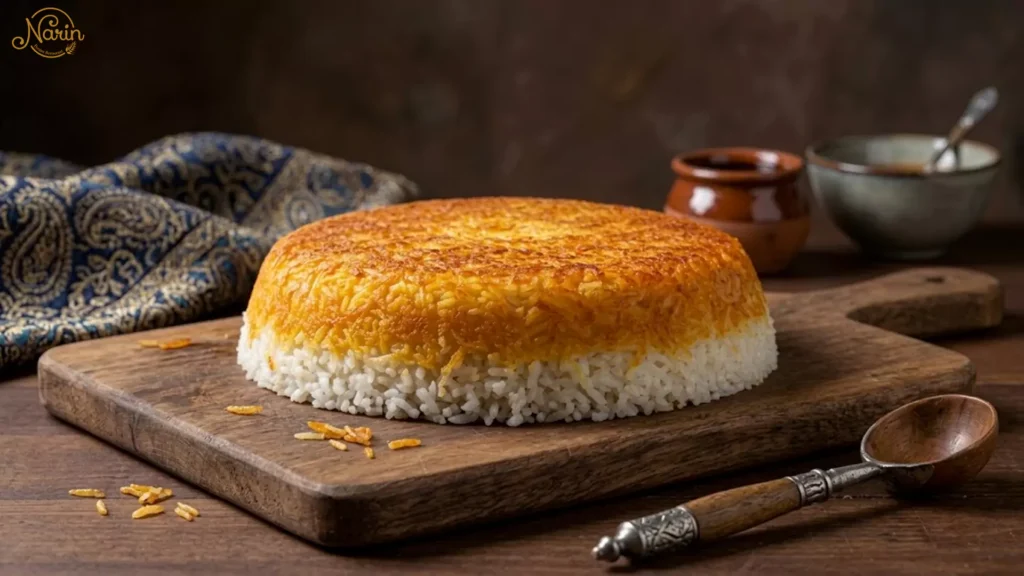
Essential Tools and Ingredients to make Persian Tahdig
- A thick-based non-stick pot
- Neutral cooking oil (e.g., canola)
- Brewed saffron
- A clean tea towel (to wrap the pot lid)
Assembling the Pot
Here is exactly how to make Tahdig in the pot:
- Set the golden base: Pour enough neutral oil to generously coat the bottom of your pan, then stir in a dash of brewed saffron. This is where your crust gets its signature colour and crunch.
- Pack the bottom layer: Scatter a couple of spatulas of your parboiled rice over the oil. Use the back of a spoon to press it down firmly into a flat, even layer.
- Build the pyramid: Scoop the rest of the rice into the pot, gently shaping it into a loose mound or pyramid in the centre. Keeping the rice piled away from the sides of the pot ensures only the bottom layer fries, while the rest steams to remain light and fluffy.
- Create steam vents: Take the handle of a wooden spoon and poke three or four holes straight down through the rice pyramid. These act as chimneys, pulling excess moisture up from the base so the bottom fries instead of turning into a wet paste.
The Golden Rule of Heat Management
Leave the lid alone during the first 15 minutes. The initial heat must be medium-high to shock the bottom layer and start the controlled browning process. Once you hear a steady sizzle, drop the heat to the absolute minimum and leave it to steam for 45 minutes.
Extracting Colour and Aroma for Saffron Rice
Saffron gives Middle Eastern food its distinct identity. Bright saffron rice depends on how you extract the colour from the threads. Hot water is common at home, but professional kitchens use a different method.
The ice technique yields a brighter, more intense result. Place a few small ice cubes over your ground saffron powder. Let them melt at room temperature. This gradual shift pulls out a deeper hue. It traps the delicate aromas and flavours that hot water often boils away.
Right before serving, mix a few spatulas of cooked white rice with this golden liquid and melted butter. Layer this vibrant mix over the snowy white rice on your serving platter. This creates the striking visual contrast known across Iranian tables.
Variations of the Crispy Crust
Different ingredients placed at the bottom of the pot absorb the oil and butter, forming distinct textures. This table gives you a quick look at the main styles you might encounter.
| Type | Base Ingredient | Texture & Flavour | Best Paired With |
| Simple (Rice) | Rice, saffron, yoghurt | Crisp, brittle, fragrant | Persian Stews like Ghormeh Sabzi |
| Potato | Thickly sliced potatoes | Crunchy exterior, soft centre | Lamb Shank, Gheimeh |
| Bread (Lavash) | Thin flatbread | Chip-like, heavy flavour absorption | Persian Kebabs like Koobideh or Barg |
| Tahchin | Rice, strained yoghurt, egg | Dense, cake-like, golden | Zereshk Polo |
Finding Sydney’s Perfect Golden Crust
Taking on a two-hour cooking process takes serious effort. Sometimes, instead of standing over the stove, you just want to pull out your phone, search for tahdig near me, and let a professional kitchen handle it. If you are looking for that authentic, home-cooked experience without the cleanup, your trail leads straight to Narin Restaurant in Northmead.
Narin Restaurant focuses entirely on recipes passed down through generations. We serve the exact quality you find in a traditional Iranian home. Flame-grilled halal meats, charcoal kebabs, and fluffy, separated saffron rice are the standard here.
Whether you order a tender lamb shank or a rich Ghormeh Sabzi, pairing it with expertly prepared rice completes the meal. The kitchen team at Narin treats the rice and its crust as a core part of the dining experience, never an afterthought.
The Final Plate
Getting traditional rice right takes practice and an eye for detail. Rinsing away the starch, managing the stove’s heat, and using the ice technique for saffron all change how the final plate tastes. Applying these methods sharpens your home cooking skills.
If you want to enjoy this level of culinary dedication without spending your evening in the kitchen, we invite you to join us. Explore our menu of charcoal kebabs and slow-cooked stews, and reserve your table on the Narin Restaurant website to experience the true flavours of Persia right here in Sydney.
Frequently Asked Questions About Persian Tahdig
Why does my rice turn into a sticky paste?
Insufficient washing leaves surface starch on the grains. Boiling the rice for too long before draining also breaks down the grain structure, causing mushiness during steaming.
What is the best type of pot for a clean crust release?
Non-stick Teflon, ceramic, or enamel-coated cast iron pots are reliable. Stainless steel pots grip the food heavily and often burn the bottom layer.
Can I achieve a good crust without using saffron?
Yes. You can bloom a little turmeric powder in the oil at the bottom of the pot to get that golden colour.
Why is my bottom layer hard and difficult to chew?
Leaving the heat too high for too long evaporates all the moisture and dries out the grains. Keep the heat at medium-high for just the first 15 minutes, then drop it to the lowest setting.
Does Narin Restaurant offer vegetarian options?
Yes, the Narin menu includes vegetarian starters like Kashk Bademjan (smoky eggplant dip) and fresh salads that complement the rice for a full meal.