
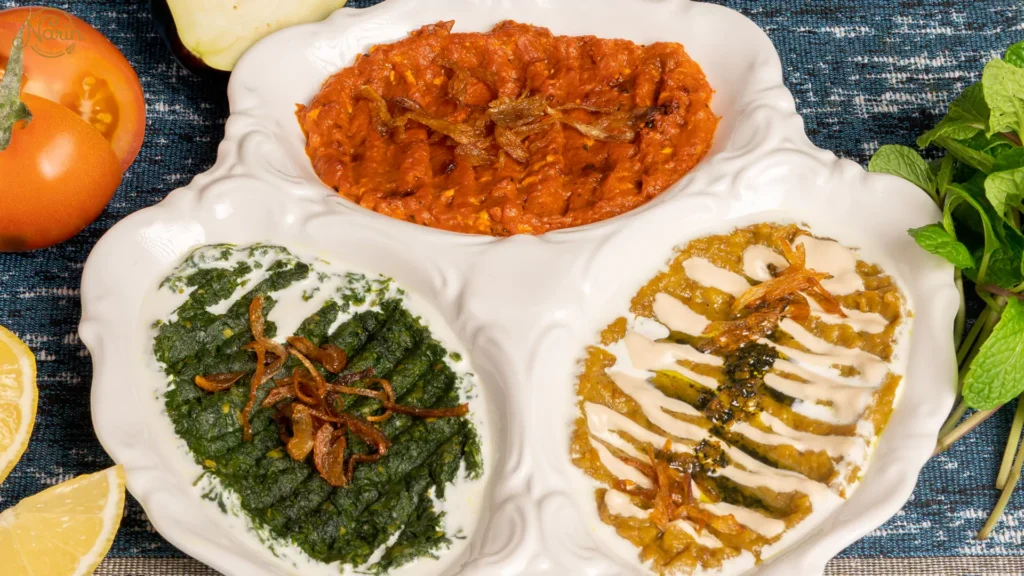
Hunting for authentic Middle Eastern food in Sydney almost always leads you straight to Persian cuisine. Most people immediately go for the massive platters of grilled meats and saffron rice. But the real magic actually happens before the main plates hit the table. Persian starters completely set the tone for the feast ahead.
A proper Iranian spread balances completely different textures and temperatures. The starters wake up your palate using fresh herbs, slow-cooked veg, and some really unique dairy products. To truly understand this food culture, you need to taste three specific dishes. Kashk bademjan, mirza ghasemi, and ash reshteh showcase distinct regions and eras of Iran.
We will break down what goes into these three beloved recipes. You will see how ancient preservation tricks create massive flavour. We will also look at how open-fire cooking completely changes a vegetable’s structure.
The Art of Mazeh and Iranian Hospitality
Sharing food sits right at the heart of Iranian social life. Before any mains appear, the table fills up with colourful small plates. Locals call this opening act “mazeh”, which literally translates to “taste”. It is never a rigid first course. Instead, it is a shared experience meant to get everyone talking and connecting.
Iranian hospitality revolves around a cultural practice called Ta’arof. It is basically an unwritten code of extreme politeness. If you sit at a traditional fabric dining spread, known as a Sofreh, the host will definitely offer you the best cuts of food. The appetizers you get will mix earthy, sour, sweet, and smoky flavours.
A classic mazeh spread always features fresh flatbreads and marinated olives. You will also find a plate of fresh herbs called sabzi khordan. The hot appetizers anchor the whole setup. Dishes like kashk bademjan, mirza ghasemi, and ash reshteh act as the ultimate comfort foods for these gatherings.
Popular Persian Appetizers and Their Flavours
These three beloved Iranian appetizers each offer a distinct combination of flavour, texture, and tradition, from creamy eggplant to smoky roasted vegetables and hearty herb-filled soup.
1. Kashk Bademjan: Creamy, Earthy, and Complex
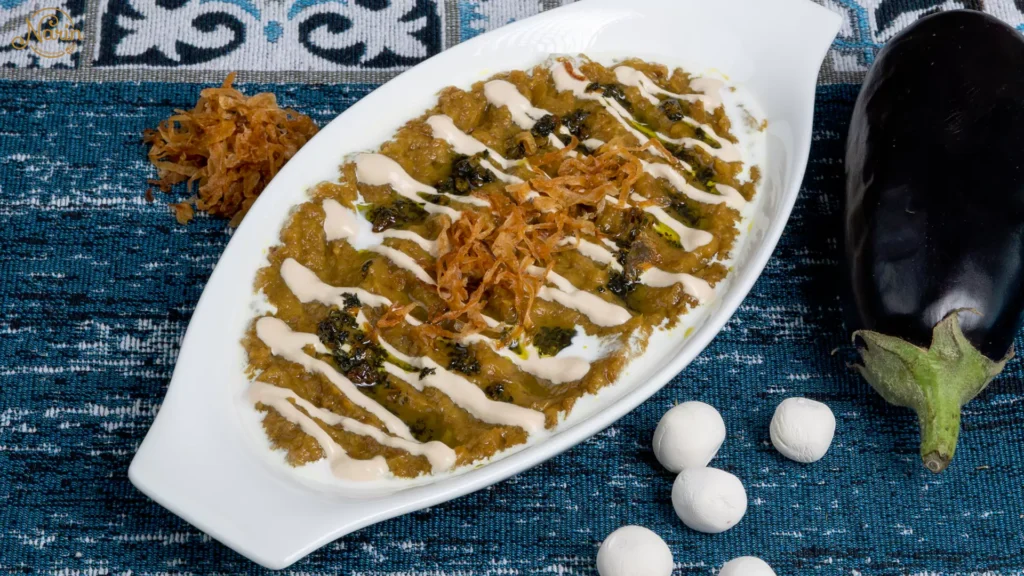
Kashk bademjan is easily one of the most popular eggplant dips in Iran. The name simply means “kashk and eggplant”. It might look like a basic spread at first glance. However, the flavour relies heavily on slow cooking and careful layering.
Everything starts with the eggplant. You peel small globe eggplants, salt them thoroughly, and then slowly fry or roast them until they completely collapse.
Practical Example: The Science of Salting Eggplants
Chopping and frying an eggplant straight away usually turns it into an oily sponge. Salting the raw pieces first draws out the water through osmosis. This simple step collapses the cell walls and fills up the tiny air pockets. The vegetable then absorbs far less oil in the pan, giving you a much silkier texture.
You mash the softened eggplant next. Then, you gently fold in heavily caramelised onions and some sautéed garlic. The magic ingredient that brings it all together is the kashk.
What Makes Kashk Bademjan So Distinctive
The ingredient that really sets Kashk Bademjan apart is kashk. This traditional fermented dairy product has a sharp, salty, and intensely savoury flavour that is much stronger than regular yoghurt or sour cream.
That bold flavour works beautifully with the mild, creamy eggplant and sweet caramelised onions. Instead of simply adding creaminess, kashk brings a deep tangy richness that gives the dish its unmistakable Persian character.
For first-time diners, it can be an unexpected flavour. But once combined with the smoky eggplant, fried onions, garlic, and dried mint, it brings all the different elements of the dish together.
Authentic Substitutions of Kashk
Avoid swapping kashk for plain Greek yogurt or sour cream if you are chasing authentic flavours. Yogurt gives you the creamy texture, but it totally misses that deep, fermented tang. You absolutely need real kashk for a genuine Persian taste.
It also packs a solid nutritional punch. Kashk is loaded with concentrated protein and calcium. The fermentation adds helpful lactic acid bacteria, especially Lactobacillus plantarum. These probiotics are brilliant for your gut health and digestion.
2. Mirza Ghasemi: The Smoky Taste of the North
If you want something vibrant and garlicky instead of creamy, mirza ghasemi is your go-to. This specific dish comes straight from the Gilan province in northern Iran. The area sits right by the Caspian Sea and is covered in lush forests. The local food up there relies heavily on fresh veg and lots of garlic.
We actually know exactly where this recipe came from. Mohammad Ghasem Khan created it back in the 1860s. He was the governor of Rasht and also worked as the Iranian ambassador to Russia. He came up with the idea while living in Saint Petersburg and brought it back home to Gilan. It quickly became a regional staple.
Open-Fire Roasting and the Maillard Reaction
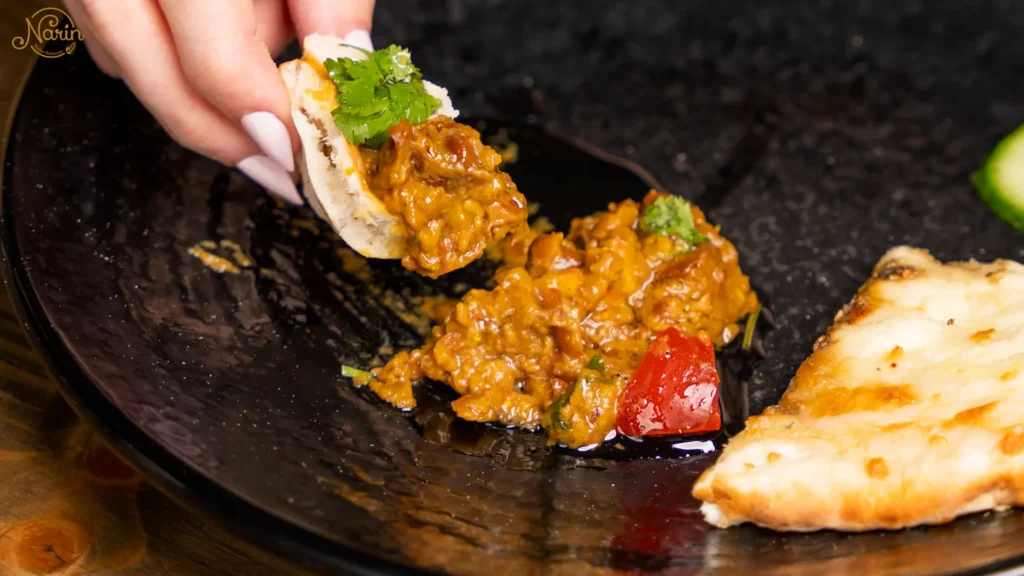
The real trick to mirza ghasemi lies entirely in how you handle the eggplant. You have to roast them whole over an open wood fire or right on the hot coals. You just leave them there until the skin is completely charred and blistered.
That intense direct heat kicks off the Maillard reaction. This happens when amino acids and sugars break down and mix together, creating hundreds of brand new flavour compounds. It gives the dish that incredibly deep and smoky smell. The fire also destroys the bitter compounds found in raw eggplants.
Once you peel off that burnt skin, you mash the soft flesh inside. Then you slowly cook it down with a heavy dose of minced garlic, fresh tomatoes, and some turmeric. The tomatoes break down to form a rich, tangy base.
Right at the end, you crack fresh eggs straight into the pan. You gently fold them through the warm vegetables until they just set. The eggs bind everything together and balance out the sharp tomato and strong garlic.
Comparison: Kashk Bademjan vs. Mirza Ghasemi
Picking your favourite really depends on your palate. Kashk bademjan is earthy, creamy, and tangy. Mirza ghasemi is dairy-free, super vibrant, and highly aromatic. It leans heavily on that fire-roasted smokiness.
3. Ash Reshteh: Nourishment and Tradition
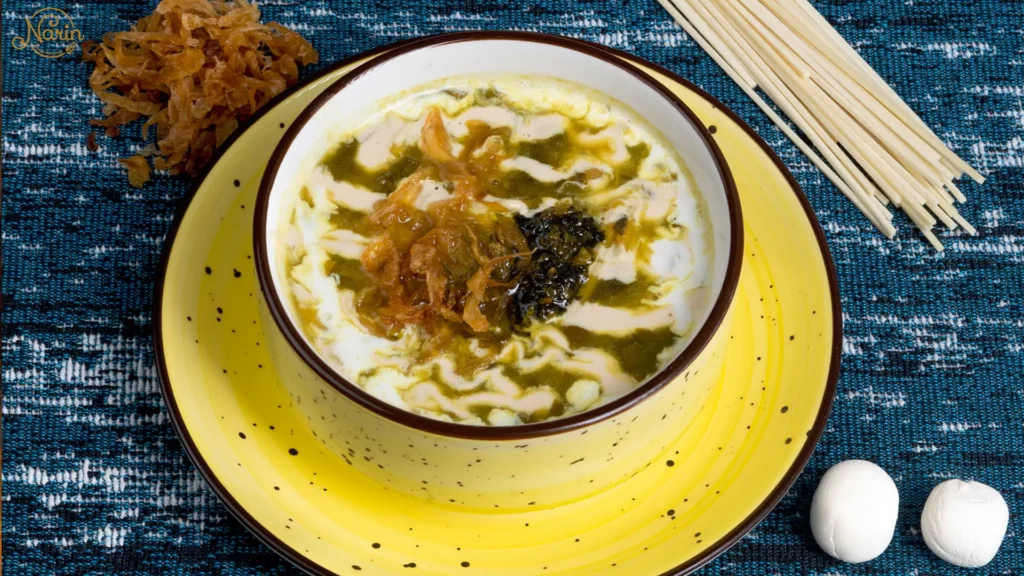
Ash reshteh gives you a totally different kind of starter experience. The word “Ash” is basically a catch-all Persian term for a really thick, hearty soup. “Reshteh” refers directly to the thin wheat noodles used in the broth.
This soup has a massive cultural footprint. You can trace its origins all the way back to the Sassanian Empire. It started out as a simple peasant food meant to get people through freezing winters. These days, it is heavily connected to Nowruz, which is the Persian New Year.
Ash Reshteh for Sizdah Bedar: The Persian Spring Tradition
Imagine a huge family gathering in a local park on the 13th day of spring. They are celebrating Sizdah Bedar, or Iran’s Nature Day. The air smells like charcoal, but everyone starts by sharing a giant pot of ash reshteh. Iranians believe the noodles represent all the tricky paths we take in life. Eating them helps untangle your problems and gives you a clear path for the year ahead. The kids also tie knots in blades of grass to make wishes, and families toss sprouted greens into rivers to wash away bad luck.
Persian Appetizer Flavour Profiles
Here is a quick look at what makes each starter unique.
| Appetizer | Main Ingredients | Core Flavour Profile | Dietary Notes |
| Kashk Bademjan | Eggplant, kashk, garlic, onions, mint | Earthy, tangy, creamy | Vegetarian, contains dairy |
| Mirza Ghasemi | Fire-roasted eggplant, tomatoes, garlic, eggs | Smoky, vibrant, savoury | Vegetarian, dairy-free |
| Ash Reshteh | Fresh herbs, legumes, wheat noodles, kashk | Hearty, herbaceous, tangy | Vegetarian, high protein |
How to Serve Persian Appetizers: Best Food Pairings
Knowing how to tackle these dishes makes the whole dining experience much better. A good Persian meal is all about balancing heavy flavours and helping your digestion along.
Checklist: Eating Like a Local
- Tear your bread: Grab fresh, warm flatbread like sangak or lavash. Tear off a small piece and use it as an edible scoop.
- Eat fresh herbs: Take little bites of fresh mint, basil, or radish from the sabzi khordan plate to reset your palate.
- Mix the garnishes: Swirl the mint oil, kashk, and crispy onions into your ash reshteh or kashk bademjan before you dive in.
- Pace yourself: Remember that these are just the starters. Make sure you leave plenty of room for the kebabs.
Pairing your starters with the right drinks sets you up perfectly for the main course.
Recommended Menu Pairings
Getting the transition right between your starters and the main feast makes a huge difference. You want to pick drinks and kebabs that actually complement those rich, smoky, and tangy flavours rather than fighting them. If you are not entirely sure what to order next, we have put together a quick cheat sheet. Have a look at these classic combinations to build a perfectly balanced menu.
| Appetizer | Beverage Pairing | Main Course Pairing |
| Kashk Bademjan | Doogh (Salty mint yogurt drink) | Barg Kebab (Tender lamb backstrap) |
| Mirza Ghasemi | Persian Black Tea with Cardamom | Chicken Kebab (Saffron marinated) |
| Ash Reshteh | Sparkling water with fresh lime | Koobideh (Minced meat skewer) |
Moving from the starters to the main grill is a very deliberate sequence. The sharp tomato acidity in mirza ghasemi actually acts as a digestive aid. It preps your stomach for the richer, smokier flavours coming off the charcoal.
Going from a comforting bowl of ash reshteh straight to a main dish gives you the full Persian experience. Check out our guide on the best Persian kebab in Sydney to learn the difference between soft koobideh and a juicy chenjeh skewer. Try Authentic Persian Flavours in Sydney
These starters do a lot more than just fill you up. Grabbing a bowl of ash reshteh connects you straight to ancient seasonal traditions. A good plate of mirza ghasemi brings the smoky scent of a northern Iranian wood fire right to your table. Meanwhile, kashk bademjan shows off the absolute genius of ancient dairy preservation. Kitchens build these dishes with real patience, relying on slow cooking and perfectly balanced spices.
Narin Restaurant is here to share these amazing flavours with you locally. Down in Northmead, our kitchen cooks up traditional recipes exactly how you would find them in an Iranian family home. Whether you are craving warm flatbread with a smoky dip or want to share a massive feast with your mates, we would love to have you. Have a look at our website to check out the menu and book your next night out.
If you read about Narin, you will see that our recipes are family heirlooms passed down over decades. Check out our full menu to plan out your next massive feast.
Frequently Asked Questions About Persian Appetizers
Are these Persian appetizers strictly vegetarian?
Yes, they are completely vegetarian. They lean entirely on fresh veggies, legumes, and dairy to build up those huge flavours and hearty textures.
What exactly is kashk made from?
It is a fermented dairy product. You make it by taking strained yogurt, adding salt, and letting it ferment and dry out. It gives you a super concentrated, tangy hit that normal yogurt just cannot match.
Can I eat mirza ghasemi cold?
You can safely eat it cold, but it is honestly so much better warm. Heating it up slightly wakes up the garlic and lets that smoked eggplant aroma really shine.
What bread should I serve with eggplant dips?
Traditional Iranian flatbreads are always your best bet. Sangak, which is baked on hot stones, or a soft thin lavash are brilliant for tearing and scooping.
Is ash reshteh a soup or a main meal?
It easily works as both. Restaurants serve it in small bowls to kick off a meal. However, because it is packed with carbs and protein, many Iranian families eat a large bowl as a main dinner during winter.