
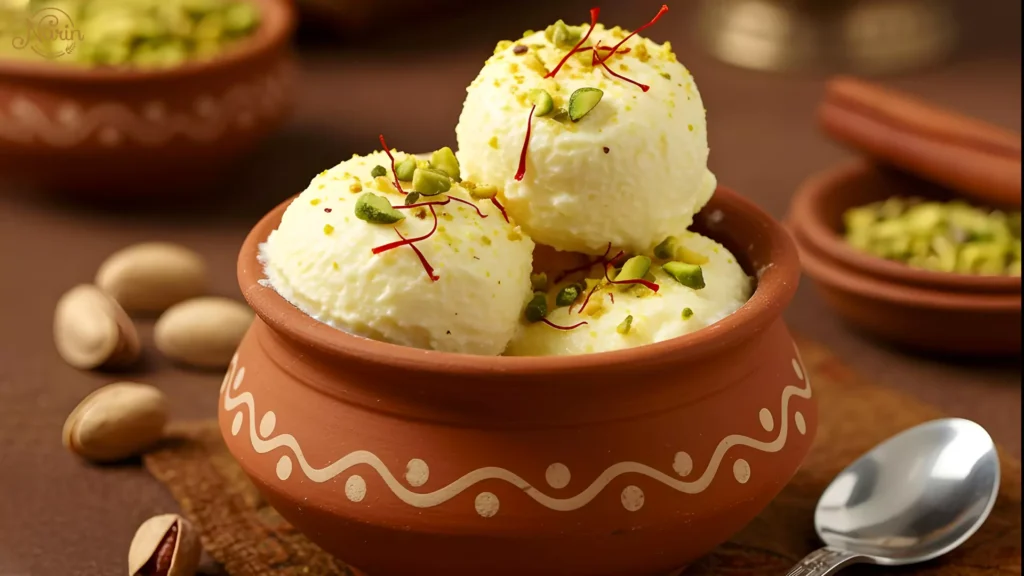
The first spoonful can be surprising. Persian saffron ice cream is cold and creamy, yet its strongest notes are floral saffron, rosewater and pistachio rather than vanilla or chocolate. Small pieces of frozen cream may give each bite a soft, chewy contrast. If you searched Persian ice cream near me in Sydney, the dessert you are looking for is often called bastani sonnati, meaning traditional ice cream.
Narin’s current Persian food menu lists a saffron and rosewater version with frozen clotted cream in Northmead, Sydney. The same dessert section includes sholeh zard, halva and Persian black tea.
Those names describe very different foods. Sholeh zard is a saffron rice dessert, while Persian halva is usually a soft, flour-based sweet flavoured with saffron, rosewater and cardamom. Persian tea is served after or between meals, and doogh belongs with savoury food rather than dessert. Knowing those differences makes a first order much easier, and prevents a salty sip of doogh from being mistaken for a sweet yoghurt drink.
Persian Desserts and Drinks at a Glance
The names are easier to remember when you compare base ingredient, flavour and place in the meal.
| Item | Main base | Typical flavour and texture | Place at the table |
| Saffron ice cream | Milk or cream | Cold, creamy, floral; often with pistachio and frozen cream pieces | Dessert |
| Sholeh zard | Rice and water | Soft, spoonable, saffron-rich, with rosewater and warm spice | Dessert or shared sweet |
| Persian halva | Toasted flour, fat and syrup | Dense, soft and warm-flavoured; saffron, rosewater and cardamom are common | Dessert or ceremonial sweet |
| Persian tea | Black tea | Clear, fragrant and gently tannic | With sweets or after a meal |
| Doogh | Yoghurt and water | Chilled, tangy and savoury; mint and salt may be present | With the main meal |
Bastani is frozen, sholeh zard is commonly chilled or at room temperature, and halva may be warm or cool. Ice cream melts, sholeh zard yields like soft rice pudding, and halva holds a dense shape.
What Is Persian Saffron Ice Cream?
Persian saffron ice cream is commonly called bastani sonnati or bastani sonnati zaferani. A typical recipe combines milk or cream, sugar, saffron and rosewater. Pistachios and thin pieces of frozen cream are frequent additions, though recipes differ between shops and families.
Saffron does more than turn the ice cream yellow. It brings a dry, floral aroma that sits apart from the sweetness. Rosewater adds a second floral note, while pistachio brings a gentle nuttiness and some bite. The frozen cream pieces soften slowly on the tongue and make the texture less uniform than standard supermarket ice cream.
Some recipes use salep for a slightly elastic texture; others use a conventional dairy base. The name bastani sonnati describes a style, not one fixed ingredient list.
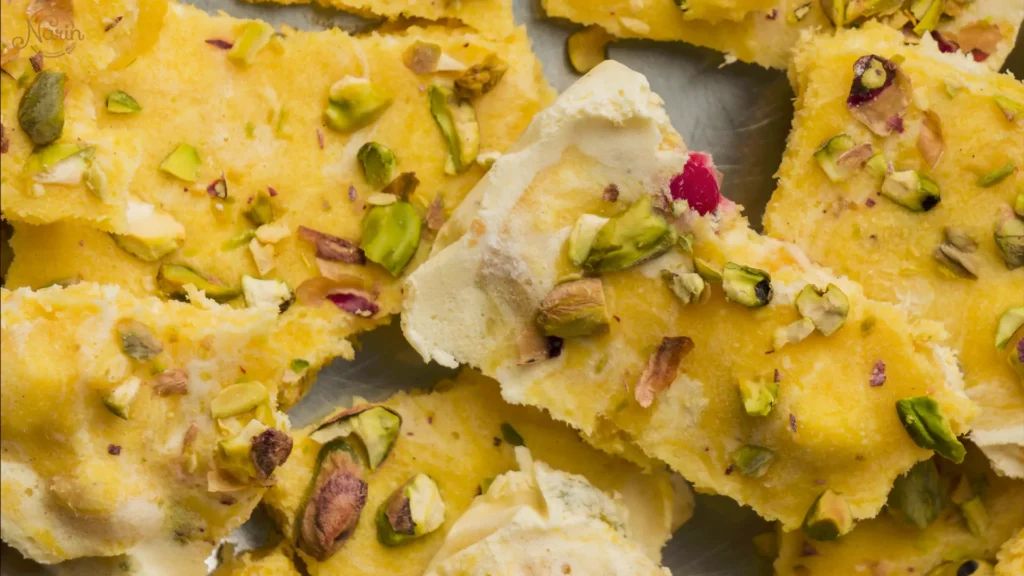
What does bastani sonnati taste like?
Expect a sweet, creamy dessert with a clear saffron aroma and a measured rosewater finish. Rosewater should smell fragrant rather than soapy; too much can cover the dairy and pistachio. Good saffron ice cream lets each flavour stay recognisable without one turning harsh.
It can feel denser than familiar ice cream. Pistachios add crunch, while cream pieces become slightly chewy as they warm. Kulfi or pistachio gelato drinkers may recognise parts of the experience, but saffron and rosewater make bastani distinct.
Tip: Let the ice cream rest for a minute before the first bite. A very cold scoop can mute saffron and rosewater, while a slight softening makes both aromas easier to notice.
What should you check before ordering Persian ice cream?
Traditional Persian ice cream normally contains dairy, and many versions include pistachios. Narin currently marks its saffron ice cream for dairy and nuts. Someone managing a milk or tree-nut allergy should ask about the current ingredients, utensils and possible kitchen cross-contact rather than relying on the dessert name alone.
Sholeh Zard: Saffron Rice Pudding Without the Dairy Assumption
Sholeh zard is a Persian saffron rice dessert made by cooking rice until the grains soften into a spoonable pudding. Sugar, brewed saffron and rosewater shape the main flavour. Cardamom, cinnamon, almonds or pistachios may appear in the pot or as decoration, depending on the recipe.
Calling it rice pudding gives an Australian diner a useful starting point, but it can create the wrong expectation. Many traditional versions use water rather than milk, so the texture comes from rice starch instead of cream or custard. It tastes lighter than dairy rice pudding even when the sugar level is generous.
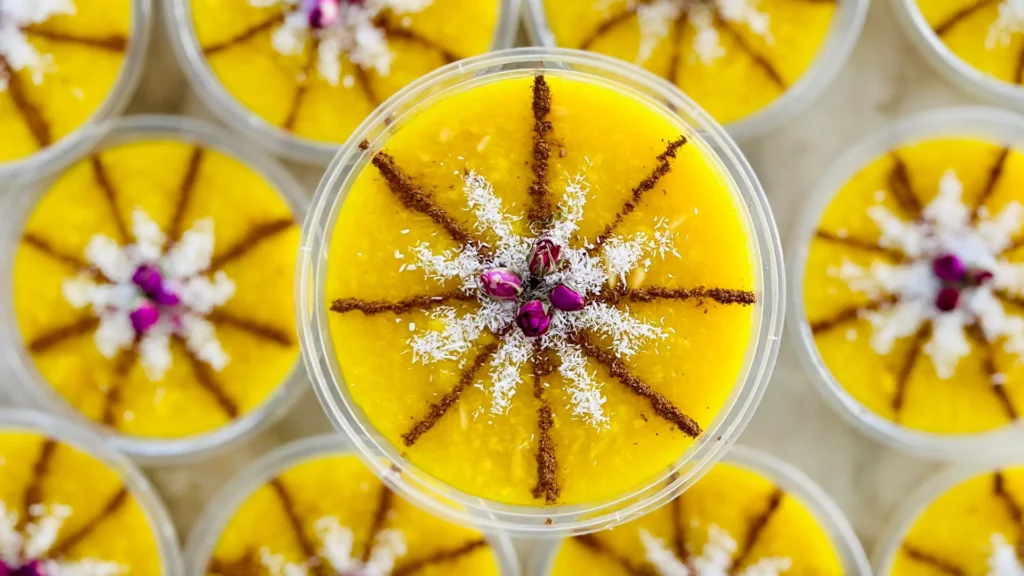
The surface often carries cinnamon lines, words, or simple patterns, with slivered nuts adding texture. Sholeh zard is closely tied to sharing in Iranian food culture and may be made in larger quantities for family, religious, or community occasions. A restaurant portion gives you the same central contrast: soft saffron rice beneath dry cinnamon and crisp nuts.
Narin’s current sholeh zard is described as saffron rice pudding with rosewater, cardamom, cinnamon and pistachios. The menu marks the restaurant’s version for dairy and nuts, which shows why a traditional recipe cannot be used as an allergen guide for every kitchen.
Warning: “Rice pudding” does not confirm that a dish is dairy-free, gluten-free or nut-free. Ask about the version being served, especially if the garnish is not visible.
Persian Halva Is Not Always Sesame Halva
An Australian shop may use “halva” for the crumbly sesame sweet made with tahini. Persian halva on a restaurant menu can be a different dessert: flour is toasted in butter or oil, then mixed with a sugar syrup flavoured with saffron, rosewater and cardamom. The mixture becomes smooth, dense and mouldable rather than flaky.
Toasting sets the flavour. Pale flour produces a milder sweet, while deeper toasting brings nutty, roasted notes and a darker colour. The syrup must be worked through the flour evenly; a well-made halva should hold its shape without feeling dry, greasy or grainy.
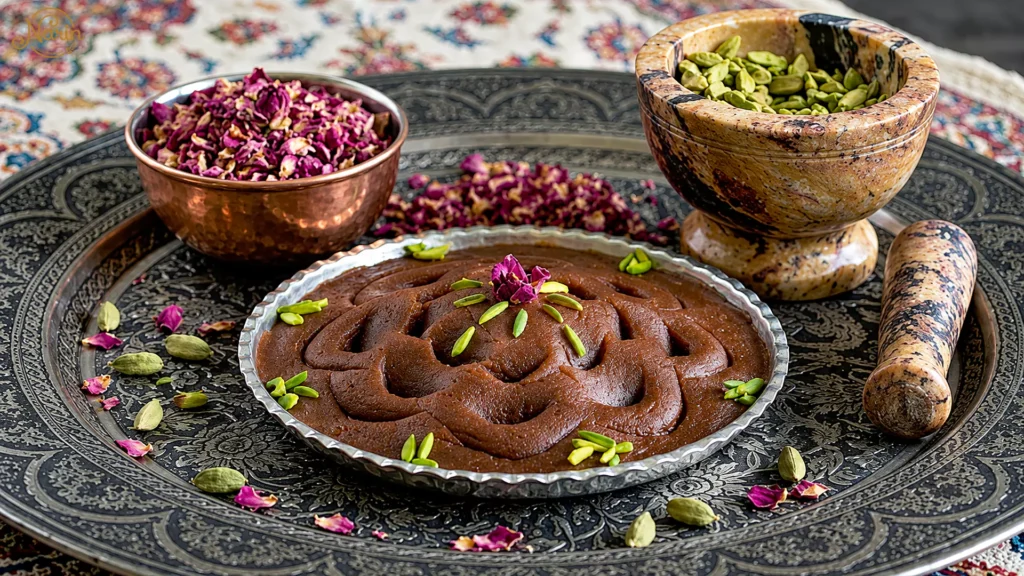
Iranian families may prepare halva for gatherings, memorial occasions or as a homemade sweet. Recipes change between households, so the name covers a family of sweets rather than one formula.
At Narin, halva is currently flavoured with saffron, rosewater and cardamom. Diners who know only tahini halva should expect a softer, flour-based sweet and check the allergen details before ordering.
Persian Tea Culture: Why the Pot Stays on the Table
Persian tea is black tea brewed with enough strength to keep its character when poured into a small glass or cup. Many people drink it clear, with sugar, nabat (rock sugar) or dates on the side. Milk is not the default addition, which keeps the tea’s colour and light bitterness easy to taste.
Tea serves a social purpose as much as a practical one. It may greet a guest, follow lunch, break up an afternoon or keep a conversation going after dinner plates have been cleared. Refilling the glass is part of the rhythm, so a shared pot makes more sense than treating tea as a single quick course.
Persian sweets work well beside black tea because the drink resets the palate. A bite of rich halva feels less heavy after a sip of clear tea. Sholeh zard’s rosewater and cardamom echo the aromas around the cup, while tea brings a slightly bitter edge after sweet saffron ice cream.
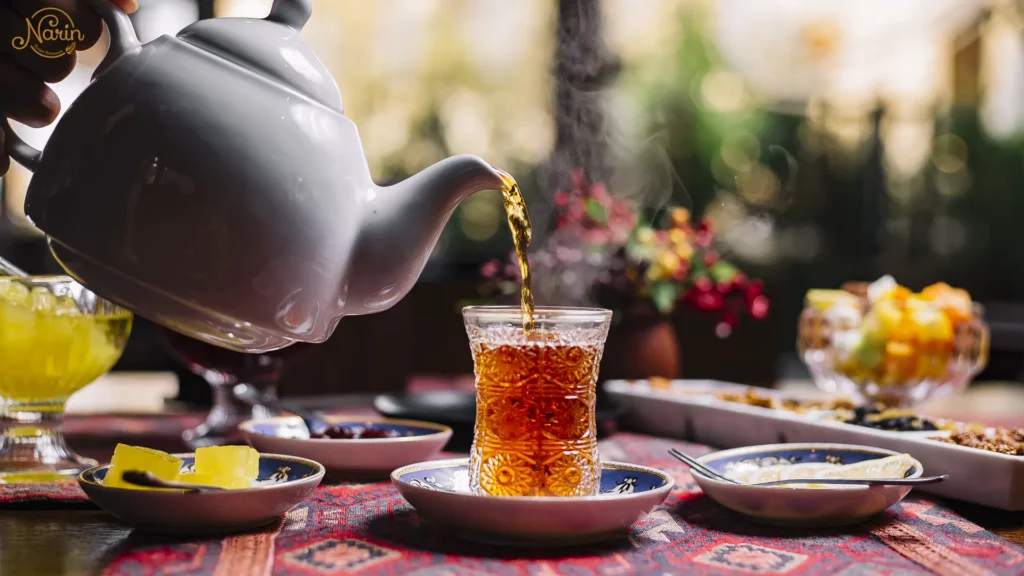
Narin’s tea service currently pairs a pot of Persian black tea with rock sugar and dates. Diners who want more background before choosing a full meal can use the beginner’s guide to Persian food to place tea, sweets, rice, stews, and grills on the same table.
Tea tip: Try the tea plain first. Add sugar or take a small bite of date only if you want more sweetness; there is no need to sweeten the whole glass automatically.
Where Does Doogh Fit?
Doogh is a chilled savoury yoghurt drink, commonly thinned with water and seasoned with salt; mint may be added, and some versions are carbonated. It is tangy and refreshing rather than sweet. That puts it beside kebab, rice and other savoury dishes, not beside saffron ice cream or halva.
Doogh is sometimes compared with lassi because both may start with yoghurt. A sweet mango lassi and salty doogh serve different jobs, though: doogh sits with grilled meat and rice, while tea carries the meal into dessert.
If you are planning a full order, drink doogh with a grill from the guide to Persian kebab in Sydney, then switch to tea if you order sweets. Keeping the drinks in those roles makes their flavours much easier to understand.
What Should a First-Time Diner Order as Persian Dessert?
Start with contrast. Saffron ice cream and sholeh zard share saffron and rosewater, yet one is frozen while the other is soft and rice-based. Halva adds toasted flour and a denser texture.
Use this checklist for a first Persian dessert order:
- Choose saffron ice cream if you enjoy creamy frozen desserts, pistachio and floral flavours.
- Choose sholeh zard if you prefer a soft rice dessert with saffron, cinnamon and rosewater.
- Choose halva if you like dense sweets with toasted, warm-spice notes.
- Order Persian tea if the table is sharing more than one sweet.
- Keep doogh with the main meal rather than carrying it into dessert.
- Tell the team about dairy, gluten or nut allergies before ordering.
- Check current availability, because restaurant menus and garnishes can change.
Example order for two
Two diners could share one savoury main, one stew, one dessert and tea. A tomato-led Gheimeh or herb-rich Ghormeh Sabzi gives the meal a different flavour base from saffron dessert; the guide to Persian stews explains the choice. Finish with one saffron ice cream and a small tea service, adding sholeh zard only if both diners want to compare textures.
A larger group can add halva and pass all three desserts around.
Finding Persian Ice Cream in Sydney
A local search for Persian ice cream near me should answer more than the dessert’s name. Check whether the venue lists saffron, rosewater, pistachio or frozen cream, whether the item is currently available, and whether dine-in, takeaway or delivery suits your plans. Allergen notes deserve a separate check because recipes and kitchen handling vary.
Narin Persian Restaurant is at 14/2B Campbell Street, Northmead NSW 2152, near Parramatta. Its current menu lists saffron ice cream, sholeh zard, halva, Persian black tea and doogh. The saffron ice cream is described with rosewater and frozen clotted cream, giving Sydney diners a clear example of the traditional Persian style.
Hours, prices and availability can change. Check Narin’s current menu before travelling, and contact the restaurant directly if you need confirmation about allergens, cross-contact, a larger booking or a particular dessert.
Start with the Texture You Already Enjoy
Persian sweets are easier to choose once the unfamiliar names become textures. Bastani sonnati is the frozen, creamy option; sholeh zard is soft saffron rice; Persian halva is dense and flour-based. Tea belongs beside the sweets, while doogh stays with the savoury part of the meal.
For someone searching Persian ice cream near me in Western Sydney, Narin offers a practical place to try those flavours in one visit without turning the meal into a formal tasting. Check the latest menu, choose one dessert that feels familiar, and share a second if you want a clearer picture of Persian tea and dessert culture.
Frequently Asked Questions
What is Persian ice cream called?
Traditional Persian ice cream is called bastani sonnati. A saffron version commonly contains milk or cream, saffron, rosewater and pistachio, with pieces of frozen cream in many recipes.
Does Persian saffron ice cream contain dairy or nuts?
Most traditional versions contain dairy, and pistachio is common. Narin currently marks its saffron ice cream for dairy and nuts. Confirm ingredients and cross-contact with the restaurant if you have an allergy.
What is sholeh zard made from?
Sholeh zard is made from cooked rice, sugar, saffron and rosewater, often with cardamom, cinnamon, almonds or pistachios. Restaurant recipes may add or handle ingredients differently, so ask before treating it as dairy-free or nut-free.
Is doogh a Persian dessert drink?
No. Doogh is a savoury yoghurt drink served with foods such as kebab and rice. It is usually tangy and salty rather than sweet, so Persian tea is the more natural drink with dessert.
Where can I find Persian ice cream near me in Sydney?
Narin Persian Restaurant in Northmead currently lists Persian saffron ice cream with rosewater and frozen clotted cream. Check the live menu or contact the restaurant before visiting to confirm availability and dietary details.