
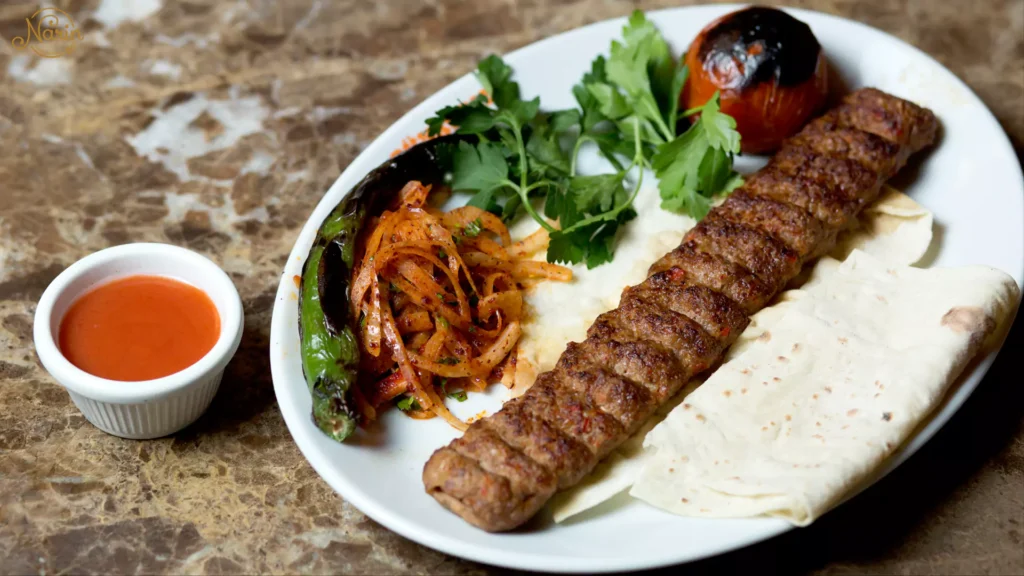
Koobideh is the kebab to order if you like grilled meat with a soft, juicy bite. It’s a long strip of seasoned mince, browned at the edges, with ridges left by the cook’s fingers. Lamb, beef or a mixture of both usually goes into it, along with onion and a few seasonings.
Koobideh kebab history is harder to date than the dish is to recognise. The name means “pounded”, after the way the meat was once prepared. Written accounts give us a clearer record of chelow kabab, the rice-and-kebab meal served in Qajar-era Iran, than they do of the first minced meat skewer. There’s no firmly established inventor or exact year to put against koobideh.
If you’ve eaten kofta or grilled rissoles, the texture won’t feel entirely unfamiliar. What makes the meal Persian is the preparation and the way it’s served: rice or bread, grilled tomato, and accompaniments you can add as you eat. You can keep your first plate simple, then try a little sumac, fresh onion or yoghurt with the next mouthful.
Koobideh before the mincer
“Koobidan”, the Persian verb behind koobideh, means to pound or beat. Persian cook Hami Sharafi describes an older method in which meat was pounded on a stone with a wooden mallet. The name came from the work done to the meat.
Most cooks now start with mince. They still have to work it into a mixture that will cling to a skewer, hold through cooking and stay tender enough to eat. The mincer changes the equipment, but it doesn’t finish the job.
That also explains why koobideh isn’t tied to one cut or animal. You’ll find lamb versions, beef versions and mixtures of the two. Seasoning differs between recipes, and English menus may spell the name kabab koobideh, kabob koobideh or kubideh. Those spelling changes don’t tell you anything about the meat, so read the description underneath.
Koobideh kebab history and the Persian restaurant meal
The history becomes easier to follow when you separate the kebab from the complete meal. Koobideh is a style of grilled meat; chelow kabab is kebab served with steamed rice.
What the Qajar records tell us
Encyclopaedia Iranica places the probable development of chelow kabab in the Qajar period. It records the meal in Naser al-Din Shah’s diet and describes its popularity in the restaurants of Tabriz. These are traces of a recognisable rice-and-kebab meal in 19th-century Iran.
The shah’s court cook, Mirza Ali-Akbar Khan Ashpaz-bashi, wrote Sofra-ye at‘ema in 1883. Iranica’s account of Qajar cuisine draws on that text and describes chelow and kebab being brought together as a dish, even though both were already familiar foods. It gives us something more useful than an invention legend: a written record of what people were cooking and eating.
It would be a stretch to call that the birth of koobideh. The records concern the meal around the kebab, and leave the first minced skewer undated. A ruler eating chelow kabab is evidence of his dinner, not proof that his kitchen invented every kebab served with rice.
Cookshops, rice and flatbread
Kebab had a place in Iran’s cookshops long before it reached a Sydney menu. Iranica describes 19th-century cookshops serving kebabs, chelow kabab and other prepared foods. Later restaurants introduced different dining settings, with the chelow-kababi keeping rice and grilled meat on the menu.
Rice was a staple in Iran’s Caspian provinces, but bread remained the everyday staple in drier regions. Koobideh served with lavash or sangak sits comfortably within that food culture. Thin lavash can be folded around a piece of kebab; sangak gives you a different bread to tear and eat alongside it.
Serving a kebab with rice changes the pace of the meal. You can mix tomato through the grains, take a bite of meat, then add onion or herbs. With bread, you can build a small mouthful with the same accompaniments. Neither approach asks you to dress the whole meal in one sauce.
The work behind a good koobideh
A short ingredient list doesn’t make koobideh an easy skewer to cook. Mince needs enough moisture to stay pleasant to eat and enough structure to survive the grill. Getting that balance right starts well before the coals are ready.
Choosing and working the meat
Lamb, beef or a blend can all make koobideh. Fat helps the kebab stay juicy through cooking, which is why very lean mince can be disappointing here. A leaner skewer may sound appealing on a menu, but dryness is a different matter once you cut into it.
The mixing takes some care. In Narin Persian Restaurant in Sydney, the meat is kneaded until it becomes a sticky mixture that holds together when lifted. Loose mince won’t behave the same way when pressed onto a skewer. For anyone used to handling burger mince gently, that amount of working can seem surprising.
Recipes vary beyond the meat and onion. Some cooks add egg, garlic or turmeric; others keep the seasoning shorter, and saffron may go into a butter baste. There isn’t enough information in the word koobideh alone to settle an allergy question. Ask about the restaurant’s recipe if an ingredient matters to you.
Getting the onion and shape right
Grated onion spreads through the meat without leaving large pieces in each bite. The excess juice is usually squeezed or strained away before mixing. The drained onion pulp then goes into the meat with the seasoning. Leave too much liquid in, and the mixture becomes harder to shape and keep on the skewer.
The cook presses the meat along a wide, flat metal skewer, then pinches the familiar ridges into it. A broad skewer gives the mixture more metal to grip than a thin one. The result should be even along its length, with no bulky section sitting beside a thinner patch.
Cooking over the grill
Traditional koobideh is cooked over hot coals. The skewers are turned frequently at the start so the meat firms around the metal instead of cooking through on one side first. The meat sits above the coals and doesn’t touch the grill bars.
The browning should bring a grilled flavour without leaving a bitter crust. Koobideh still needs to be cooked through: dark edges don’t tell you the temperature inside. Food Standards Australia New Zealand recommends at least 75°C in the centre for minced meat, checked with a clean food thermometer.
Koobideh, Barg or Chenjeh?
Koobideh gives you an even, finely minced texture. The onion and seasoning run through the skewer, so you get them in each bite. It should cut easily and stay together on the fork, with enough juice to keep it from feeling dry.
Barg and chenjeh have a different chew. Barg uses a prepared whole cut, while chenjeh keeps the meat in pieces; you can feel the fibres rather than the texture of worked mince. Joojeh means chicken kebab, giving you another choice if you’d prefer poultry.
There’s no need to choose the most unfamiliar name to try Persian food. Start with the kind of meat you already enjoy, then branch out from there. Our guide to Persian kebabs in Sydney covers these styles and the mixed plates that put more than one on the table.
Eating your first plate of koobideh
Take a bite of the kebab before adding anything. You’ll get a better sense of the meat and seasoning, then you can decide how much tartness or freshness you want alongside it. The accompaniments let you change the next bite without changing the whole plate.
These are familiar partners for koobideh:
- Grilled tomato: press it open and stir a little of the soft flesh and juice through the Persian rice.
- Sumac: sprinkle this tart seasoning lightly over the meat or rice, then taste.
- Raw onion and fresh herbs: eat a small amount alongside the kebab if you like sharper flavours.
- Yoghurt: a spoonful on the side gives you a cool, tangy mouthful between bites of grilled meat.
Doogh, the traditional yoghurt drink, is savoury rather than sweet. It combines yoghurt and water, often with salt and herbs, and can be still or fizzy. That can be a surprise if you’re expecting something closer to a sweet lassi. Ask which version is available if you’re curious but haven’t tried it.
A tip for your first plate: Go lightly on the sumac to begin with. You can add more, but tasting as you go lets you find the amount you like.
Finding a koobideh order in Sydney
Searching for “koobideh kebab near me” is a useful start, but the dish description does more work than the map pin. Check that the restaurant lists minced meat skewers and says what comes with them. Recent photos can help you work out whether you’re comparing a rice plate, a bread meal or a mixed grill.
Searching for the “Best koobideh near me” depends on what you want for dinner. A lamb-heavy mixture, a beef version and a mixed meat skewer can suit different tastes. The number of skewers matters too, especially once you’re adding sides or ordering for more than one person.
Before you place an order, check:
- Which meat is used in the koobideh.
- How many skewers come with the dish.
- Whether rice, bread, tomato and other sides are included.
- Any ingredients or preparation details relevant to your dietary needs.
- The collection or delivery time, and the final checkout price.
For takeaway, compare collection with the delivery estimate shown for your address. The closest restaurant won’t necessarily deliver to every nearby street, and the price on a delivery platform may differ from the restaurant menu. Check the channel you’re actually ordering through.
Best Koobideh Kebab at Narin Restaurant in Northmead
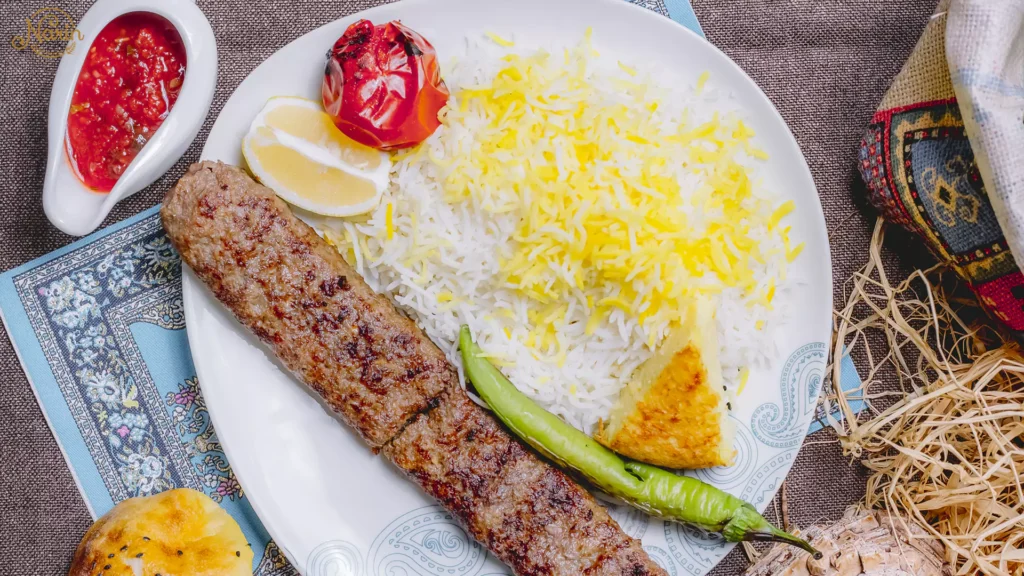
Narin’s Koobideh Kebab comes with 2 skewers of seasoned minced lamb with a portion of beef, plus saffron rice, grilled tomato and chilli. Our family-run restaurant is in Northmead, near Parramatta. If you want your first meal to focus on koobideh, this is the individual plate to look for.
You can try it alongside another kebab. Here’s how the current combinations differ:
| Dish | What’s on the plate | Why you might choose it |
| Koobideh Kebab | 2 koobideh skewers | You want the minced meat kebab by itself. |
| Soltani Kebab | 1 koobideh and 1 barg | You’d like to try mince beside lamb backstrap. |
| Shahi Kebab | 1 koobideh and 1 chicken thigh skewer | You prefer a lamb-and-beef kebab with chicken. |
| Narin Kebab Special | 1 each of koobideh, barg and chicken thigh | You’d like 3 styles in the same order. |
The Narin Kebab Special gives you more variety, though the individual koobideh may be all you’re after. Choose for your appetite and ask about portions if you’re sharing. The address is 14/2B Campbell Street, Northmead NSW 2152; use the live menu for prices and availability.
Koobideh kebab history, served in Sydney
The name still tells you something useful about the food: koobideh is meat that has been worked, shaped and grilled. The Persian restaurant tradition adds the rice, tomato and accompaniments around it. Together, they make a meal you can get to know one mouthful at a time.
To try it at Narin, view our menu and ordering options. Start with koobideh on its own or choose a mixed plate if another skewer catches your eye.
Questions about koobideh kebab history
Who invented koobideh kebab?
No single inventor is firmly established. The Qajar-era records document chelow kabab, the rice-and-kebab meal, rather than the first koobideh skewer.
Is koobideh lamb or beef?
It can be either, or a mixture. Narin uses seasoned minced lamb with a portion of beef.
Is koobideh spicy?
Many recipes are mildly seasoned. Narin serves chilli alongside its koobideh, so tell staff if you’d prefer to leave it out.
Is koobideh gluten-free?
Narin marks its Koobideh Kebab as gluten-free. If you have coeliac disease, check the ingredients, sides and cross-contact arrangements with staff before ordering.
Is koobideh halal?
Halal status depends on the meat and how it’s prepared. In Narin Persian Restaurant all meat prepared in our kitchen is halal.