
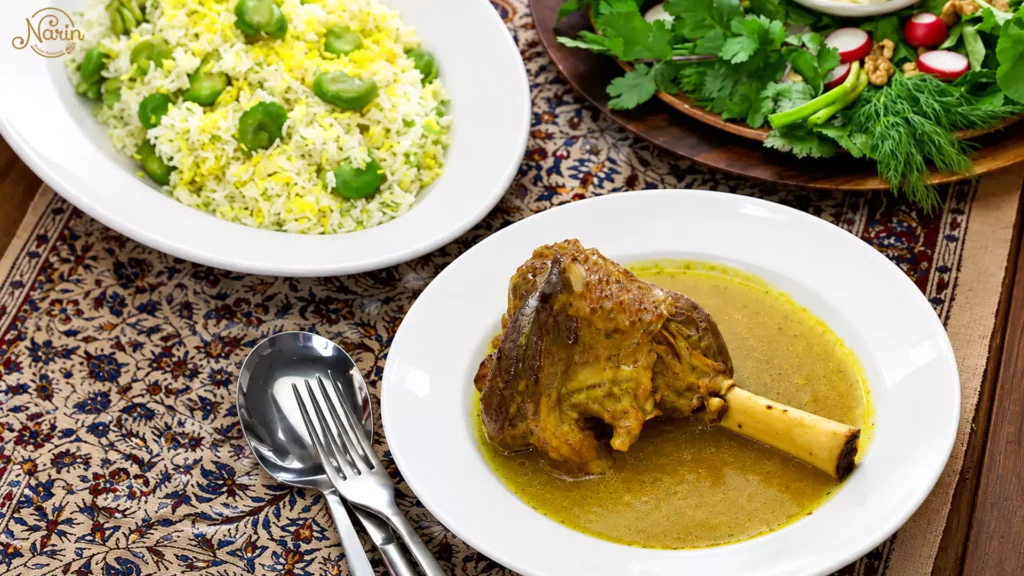
Baghali Polo is rice cooked with dill and broad beans, often finished with a little saffron. With a tender lamb shank beside it, you’ve got Baghali Polo Ba Mahicheh. The meat may be what catches your eye on the menu, but the rice is well worth eating on its own, too.
A little of the lamb’s cooking sauce settles between the grains. The beans stay soft, and there’s dill in almost every mouthful. A spoonful of cool cucumber yoghurt or a bite of sharp salad makes a welcome change after the richer meat.
This is a dish that turns up at gatherings and celebratory meals, though it doesn’t need a special occasion. It’s just as appealing as a dinner out when you have time to sit over a proper plate of food. In Sydney, you’ll see the rice paired with different cuts of lamb, chicken, or fish, so the full menu description matters. Here, it’s the shank: slow-cooked lamb beside dill-and-bean rice.
What Is Baghali Polo Ba Mahicheh?
Baghali Polo Ba Mahicheh means broad bean rice with lamb shank. Baghali is the Persian name for broad beans, also sold as fava beans, and polo refers to the rice dish. Ba means with; mahicheh is the shank in this meal.
The rice keeps its name when the meat changes. Chicken with Baghali Polo is another familiar pairing, and some menus have a version with fish or lamb neck. Seeing the same rice name on several dishes doesn’t mean the plates will be identical.
There are quite a few rice dishes in Persian cooking, each named for the ingredients that go into it. This one has broad beans and dill; others have lentils, barberries or mixed herbs.
The Flavour of Baghali Polo: Dill, Broad Beans and Saffron
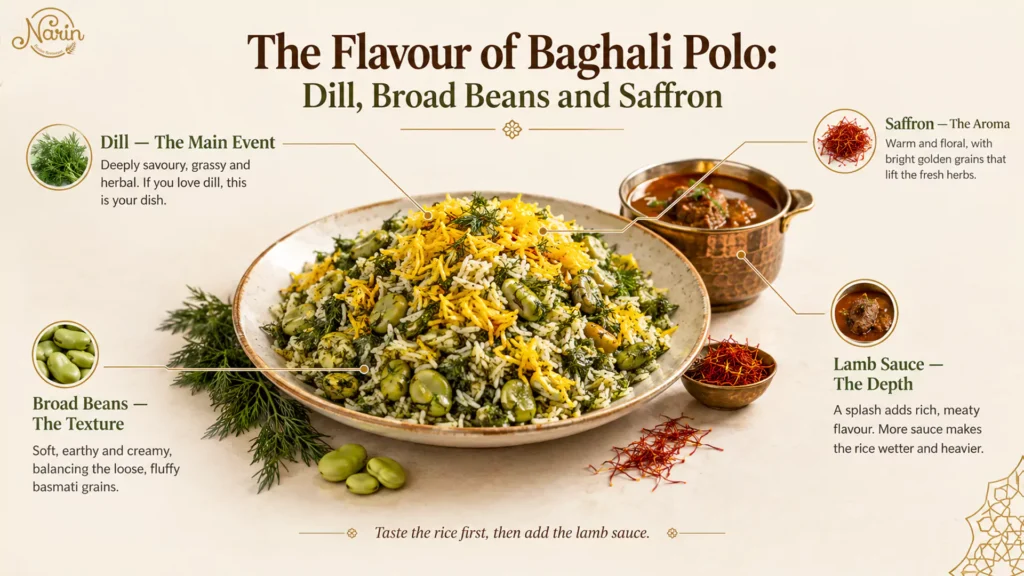
Baghali Polo is all about clean, herbal notes rather than chilli heat. Breaking down the plate, here is exactly what you are tasting:
- Dill is the main event: It gets mixed through the rice with a heavy hand. The flavour is deeply savoury and grassy. If you love dill in your yoghurt or salads, this will be right up your alley. But if you aren’t a fan, the lamb broth won’t mask the taste, so ordering a different rice dish is a smart move.
- Broad beans bring the texture: These add a soft, slightly earthy bite. Once cooked properly, their natural creaminess breaks up the loose, fluffy basmati grains perfectly.
- Saffron adds the aroma: You will usually spot bright yellow grains scattered across the top. Saffron brings a warm, floral scent that balances the heavy hit of green herbs.
- The lamb sauce changes everything: Spooning the braising liquid over your rice alters the whole dish. A quick splash adds a rich, meaty depth without losing the dill. Drenching the plate makes it much wetter and heavier. Tasting the rice on its own first is always a good idea before committing to the sauce.
Why Persian Lamb Shank Works So Well with This Rice
Persian lamb shank is cooked slowly, in liquid, until the meat softens enough to come away from the bone. Shank has connective tissue that needs this sort of cooking. The long braise is what turns the cut into something you can pull apart with a fork.
There isn’t a single lamb sauce that every cook follows. Onion is a common starting point, with turmeric and pepper appearing in many recipes. Saffron or cinnamon can be added, and some versions include tomato paste.
Those differences are quite noticeable on the plate. A lighter onion-based broth leaves more of the rice’s herb flavour apparent; a fuller sauce adds more of its own seasoning. The lamb should still taste of lamb, with the spices fitting around it.
The bone stays on the plate as you ease the meat away, taking a little rice with each forkful. A fork separates the meat; a spoon helps gather the rice and loose beans. Lamb neck is another cut that suits slow cooking, but it gives you a different piece of meat even when the rice alongside is the same.
How Baghali Polo and Lamb Shank Are Made
There are usually 2 pots involved: one for the lamb and one for the rice. The meat needs a lengthy braise. The rice has a shorter boiling stage, followed by steaming, and that’s where its loose texture comes from.
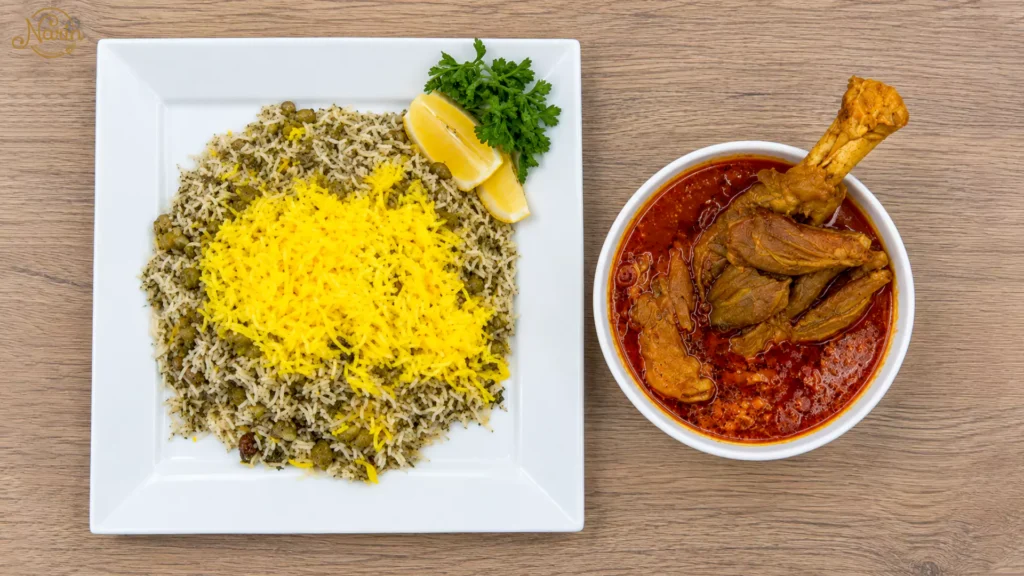
The rice is boiled, drained, and steamed
Premium long-grain rice, ideally a fragrant variety from northern Iran like Tarom or Hashemi, gets a good rinse and a soak before hitting the boiling water. Cooks drain the pot before the grains go completely soft. At this point, the rice should yield a little on the outside but still hold a firm centre.
The partly cooked rice is layered with dill and broad beans, then covered and steamed gently. That finishes the grains without requiring much stirring. Repeatedly turning the rice at this stage can break it into smaller pieces.
Preparing the broad beans adds another small job. Fresh ones need to come out of their pods, and their outer skins are often removed as well. Frozen broad beans are used in home recipes too, though some packets are peeled and others aren’t.
The result should be rice you can lift onto a plate in soft, separate grains. The beans sit amongst it, and the dill is spread through the pot. Our guide to Persian rice and tahdig goes further into the boiling and steaming method.
Cooking tip: The rice still has to steam after draining. If it’s already completely soft when it leaves the boiling water, that extra cooking can make it mushy.
The lamb cooks at its own pace
The shank braises with its seasonings until tender. Its size and the cooking method affect the time it needs, so a fixed number of hours won’t suit every pot. For a home dinner, starting the lamb first leaves room to finish the rice closer to serving.
Tahdig can be made as the rice steams. It’s the crisp layer at the bottom of the pot, made with rice, potato or thin bread depending on the recipe. A piece beside the rice adds crunch, but it isn’t automatically included with every restaurant order.
Baghali Polo Compared with Other Persian Rice Dishes
The names become easier to remember once you’ve tried a few plates. These are some of the rice dishes you might see together on a Persian menu.
| Rice dish | Ingredients that distinguish it | Flavour |
| Baghali Polo | Broad beans and dill | Herbal and savoury, with soft beans |
| Sabzi Polo | Mixed herbs, often including dill, parsley and coriander | A mixture of herb flavours |
| Zereshk Polo | Barberries and often saffron | Tart berries against fragrant rice |
| Lubia Polo | Green beans, tomato and commonly meat | A more tomato-led, savoury dish |
Sabzi Polo and Baghali Polo can look similar, since both may contain plenty of dill. The broad beans help you recognise the latter. Sabzi Polo uses a mixture of herbs instead.
Chelo is another name you’ll come across. It means plain prepared rice served beside a stew or meat. A lamb dish with plain saffron rice can be delicious, but it’s a different order from the broad-bean-and-dill combination.
What to Eat with Baghali Polo and Lamb Shank
A fresh side is particularly welcome with Baghali Polo and lamb shank. The meat and its sauce can be rich, and something cool or sharp gives the next mouthful a different feel. It doesn’t take much: a small salad or bowl of yoghurt can do the job.
Shirazi salad has finely diced cucumber, tomato and onion, dressed with citrus. Its crunchy texture contrasts with the soft lamb, and the dressing tastes sharp against the sauce. Cucumber yoghurt, or mast-o-khiar, is creamier and often has a little mint in it.
Some other sides worth considering are:
- Torshi: Persian pickled vegetables with a sharp, vinegary taste.
- Fresh herbs: small bites between mouthfuls of rice and lamb.
- Shallot yoghurt: a yoghurt side with the flavour of shallots.
For 2 people, a shared salad and yoghurt side let each diner have a little of both. Keep them in their own bowls and help yourself as you go.
There may be room for a shared starter as well. The Persian appetisers include dishes such as kashk bademjan, made with eggplant and tangy kashk. Since the main already includes rice and lamb, serving sizes are worth asking about before ordering several starters.
Dietary Questions Before Ordering Baghali Polo
Rice, dill and broad beans are naturally gluten-free. Whether the complete dish suits a gluten-free diet depends on its sauce, stock, preparation and accompaniments. Bread tahdig contains gluten; a rice dish doesn’t become gluten-free just because its main ingredient is rice.
The rice can be vegetarian if it hasn’t been cooked with meat stock or juices. Butter matters for a vegan order too.
For a halal diet, the meat’s sourcing and preparation need to be confirmed. Our guide to halal Persian food in Sydney explains what to ask about. Dietary requirements and allergies are best raised before the order goes to the kitchen, including dairy or nuts in any starters and sides.
Trying Baghali Polo and Lamb Shank in Sydney
For Baghali Polo in Sydney, the rice description should mention dill and broad beans. The accompanying protein is the next detail. Shank, neck and fish may all appear with the same style of rice, but they make different meals.
If you’re ordering baghali polo and lamb shank in Sydney, Narin’s menu lists slow-cooked spring baby lamb shank served with saffron rice, dill and baby broad beans. There’s also a lamb neck version and another with fried barramundi.
At a table of 2, different mains can still work with the same shared sides. A lamb shank order and a barramundi order give both diners the dill-and-bean rice, with a salad or yoghurt between them. Serving sizes matter if you’re thinking of sharing a single main instead.
A few details to settle before ordering:
- Your choice of meat or fish.
- Any sides included in the price.
- Portions if the main will be shared.
- Whether tahdig is available separately.
- Dietary requirements and allergies.
Tahdig isn’t specified in the shank’s menu description, so its availability needs checking. The same applies to any extras. That leaves the meal itself straightforward: lamb, dill-and-bean rice and whichever side you fancy.
Taking Baghali Polo Home
Leftover Baghali Polo needs to be cooled and stored promptly, like other cooked rice. A shallow container helps it cool faster than leaving it in a large, tightly packed portion. The lamb can be stored with some of its sauce to keep it moist when reheated.
NSW Food Authority advises refrigerating leftovers within 2 hours and keeping them below 5°C. Refrigerated cooked rice should be eaten within 2 days. Time out of temperature control is cumulative, including the trip home and time spent serving.
Food safety warning: Food kept between 5°C and 60°C for 2–4 hours should be eaten immediately or discarded, not saved for later. After 4 hours, discard it. Take extra care with takeaway rice, which may already have been reheated.
Suitable leftovers need reheating until steaming hot throughout, and rice should never be reheated more than once. Heating only the portion you’re going to eat avoids repeatedly warming the rest.
Baghali Polo and Lamb Shank at Narin Persian Restaurant in Sydney
With Baghali Polo and lamb shank, there’s plenty on the plate to enjoy: tender meat, rice full of herbs, and sauce to spoon over both. A sharp salad or cool yoghurt finishes the plate nicely. It’s a satisfying way to try Persian rice beyond the plain saffron version.
Narin serves the dish at 14/2B Campbell St, Northmead, near Parramatta. For lunch or dinner, get in touch with the Narin team about a table, current availability or any dietary requirements before visiting.
Frequently Asked Questions about Baghali Polo
What does Baghali Polo mean?
Baghali means broad beans, and polo refers to the rice dish. Ba mahicheh means it comes with lamb shank.
Is Baghali Polo spicy?
Usually it’s herbal and savoury rather than chilli-hot. The lamb’s seasoning varies, so ask about chilli if you prefer to avoid it.
Can Baghali Polo be made with frozen broad beans?
Yes. Frozen broad beans are used in home recipes; check whether they’re peeled and follow the recipe’s directions for preparing them.
Is Baghali Polo gluten-free?
The main rice ingredients are naturally gluten-free. Stocks, sauces, preparation and any accompanying tahdig still need checking with the kitchen.
Does Baghali Polo always come with lamb?
No. The rice can be served with chicken, fish or without meat. A vegetarian version needs to be free of meat stock and juices too.