
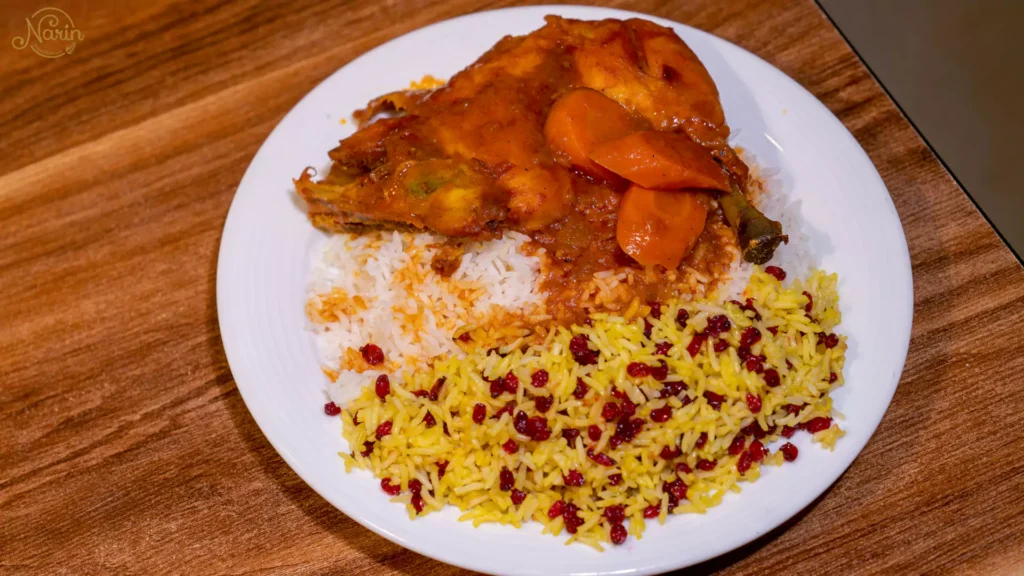
Zereshk polo is a classic Iranian rice dish made from steamed long-grain Iranian rice topped with saffron-tinted grains and tart red barberries. First-time diners often look at those glossy red berries and expect a sugary hit like dried cranberries or sultanas. Take one bite and your taste buds get a completely different surprise. Those berries are tangy, bright, and sharp, warmed up with a touch of butter, saffron, and just a pinch of sugar.
That punchy sweet-sour contrast makes barberry rice a staple at Iranian family dinners and big parties alike. You don’t need to spend hours in the kitchen to appreciate a good plate of it here in Sydney. If you’ve spotted Persian barberry rice on a menu and wondered what it actually tastes like, here is everything you need to know before you order.
What Is Zereshk Polo? A Quick Look at Persian Barberry Rice
Zereshk polo translates directly from Persian as barberry rice (zereshk means barberry and polo means steamed layered rice). In Iranian dining, rice isn’t just a plain side dish pushed to the edge of the plate. It’s the main event.
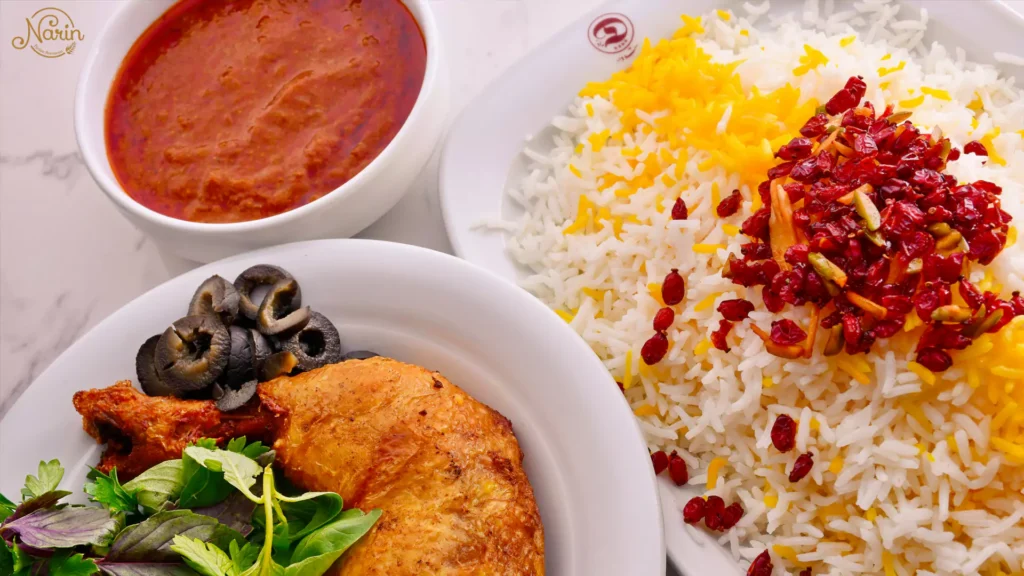
When a plate of Persian barberry rice lands in front of you, the first thing you notice is the colour. Most of the platter is fluffy white Iranian rice, and right across the top sits a generous scoop of yellow saffron rice mixed with shiny red berries. The plain rice calms everything down while the berries give each forkful a sharp, fruity kick. We actually put together a full piece on the Persian saffron rice and crispy tahdig if you want to see how our kitchen gets each grain so light and separate.
What Goes into Persian Barberry Rice?
A proper plate of zereshk polo relies on 5 simple ingredients that balance each other out in texture and taste. There are no heavy sauces or fiery chillies hiding in the rice. Every single ingredient has a clear job on the plate.
Seedless red barberries (zereshk)
These tiny red berries grow on the Berberis vulgaris bush. Farmers in Iran’s South Khorasan region, mostly around the towns of Birjand and Qaen, grow more than 90% of the world’s supply and harvest over 20,000 tonnes every autumn. They don’t have any seeds inside, and they pack a sharp, lemony tang.
Aged long-grain Iranian rice (berenj)
Good Persian rice is aged so it cooks up long and airy rather than sticky. Plain white basmati forms the base of the dish and catches all the melted butter and meat juices on your plate.
Steeped saffron (zaferan)
Cooks grind dry saffron threads in a mortar and steep them in a splash of hot water. That deep red liquid turns the top layer of rice bright gold and gives off a warm, honey-like scent.
Butter and a pinch of sugar
Eating raw barberries straight out of the packet will make your cheeks pucker. A quick toss in warm butter with a tiny pinch of sugar softens the harsh edge of the acid without turning the dish sweet.
Pistachio and almond slivers (khallal)
When kitchens dress the rice up for guests or weekend feasts, they scatter thin green pistachio slivers and pale blanched almonds over the top for a light crunch.
Here is a quick look at each ingredient in Persian barberry rice, how it tastes, and what it brings to your plate:
| Ingredient | Persian Name | What It Tastes Like | Why It Is in the Dish |
| Dried Barberries | Zereshk | Tangy, sharp, soft | Gives the rice its ruby colour and sour pop |
| Iranian Rice | Berenj | Mild, light, fluffy | Soaks up the saffron butter and chicken broth |
| Brewed Saffron | Zaferan | Earthy, floral, warm | Connects the buttery rice with the tart fruit |
| Butter and Sugar | Kareh and Shekar | Rich, gently sweet | Rounds out the sharp bite of raw barberries |
| Pistachios and Almonds | Khallal | Crisp, fresh, nutty | Adds crunch against the soft steamed grains |
Barberries Are Not Cranberries or Currants!
If you’ve eaten Middle Eastern rice dishes made with dried cranberries, sultanas, or currants, don’t expect the same taste here. Cranberries and currants are sweet and chewy. Real Iranian zereshk is soft, delicate, and distinctly sour, much closer to fresh pomegranate seeds or a squeeze of lemon than dried fruit.
The Sweet and Sour Balance of Zereshk Polo
The secret behind zereshk polo is how it balances fat, acid, and gentle sweetness in a single forkful. Eat a dried barberry straight from the bag and it’ll make your mouth pucker right up. Mix it with warm butter, a hint of sugar, and fragrant saffron rice, and that sharpness turns into a mellow, mouth-watering tang.
Think of how tart apple sauce works with roast pork, or how cranberry jelly cuts through a rich Sunday roast. Barberry rice does the exact same job on an Iranian table. The bright fruit acidity cuts right through rich braised meats and buttery rice so you never feel weighed down after a big meal. If you’re new to how Iranian cooking uses sour fruits like pomegranate, sumac, and dried lime, have a read of our beginner’s guide to Persian food and Iranian cuisine.
Practical Example: Imagine dipping your fork into a spoonful of onion-braised chicken gravy, then scooping up fluffy white rice topped with 5 or 6 tangy barberries. First you taste the warm, savoury saffron broth. Half a second later, the little red berries pop with a clean citrus-like brightness that refreshes your mouth for the next bite.
Saffron Chicken Is the Classic Pairing of Zereshk Polo Morgh
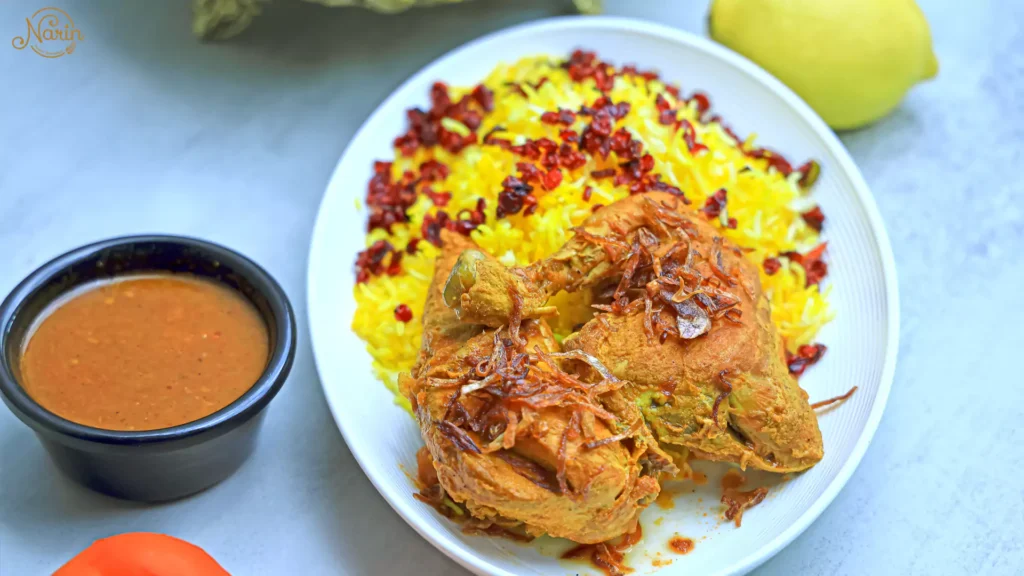
When Iranians order zereshk polo, 9 times out of 10 they eat it as zereshk polo ba morgh, which means barberry rice with braised saffron chicken. On a restaurant menu or at a family lunch, these two belong together like fish and chips in Australia.
The chicken (morgh) in zereshk polo morgh isn’t dry or plain. Cooks brown bone-in chicken pieces with plenty of sliced onions and a pinch of turmeric, then let them simmer slowly in tomato paste, lemon juice, and brewed saffron. After an hour or two on a gentle heat, the meat falls straight off the bone. It comes to the table with a small bowl or ladle of that golden saffron-and-onion pan gravy to pour over your white rice and tart barberries.
What Else Do Iranians Eat With Barberry Rice?
Chicken is the classic match, though Persian barberry rice goes brilliantly with grilled meats, slow-cooked lamb, and cold yoghurt sides too. At a Persian restaurant, you’ll often see tables ordering a large extra platter of zereshk polo to share around with skewers and starters.
1. Flame-Grilled Kebabs
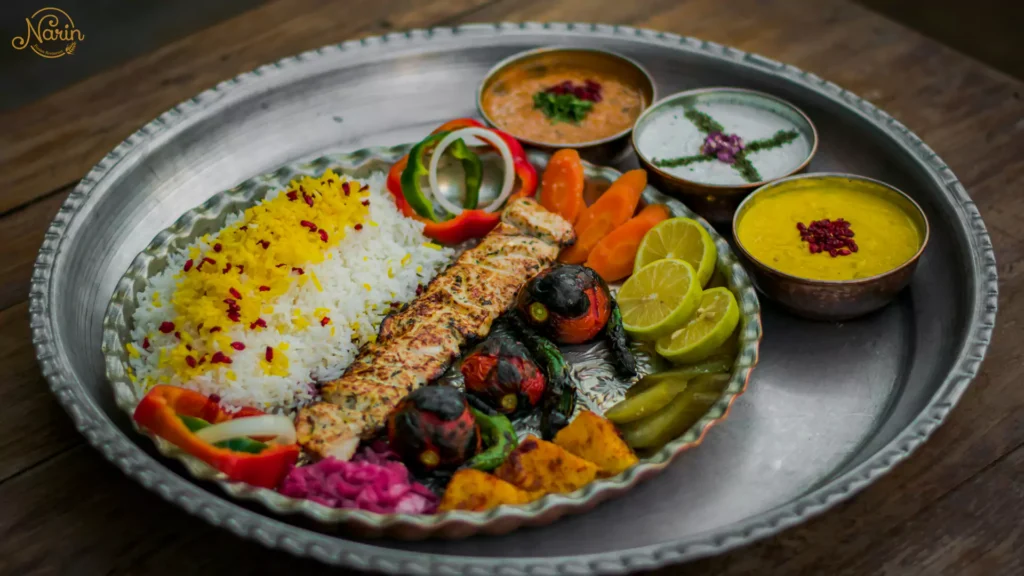
The tart berries in barberry rice work naturally alongside juicy meats cooked over a hot gas grill. A crowd favourite is Joojeh Kebab, which is chicken marinated in saffron and lemon before hitting the open gas flames. Because the marinade already has lemon and saffron in it, the chicken matches the tangy berries on the rice straight away.
Red meat lovers often swap plain rice for zereshk polo when they order Koobideh (minced lamb and beef skewers) or Barg and Chenjeh (marinated lamb fillets and backstrap). The sharp red berries cut through the savoury richness of the lamb fat. It also goes well with Mahicheh, a slow-braised lamb shank, whenever you feel like a tangier alternative to broad-bean and dill rice. Want to know the difference between each skewer before you order? Check out our guide to the best Persian kebabs in Sydney.
2. Cold Side Dishes and Warm Starters
No Iranian table feels finished without a few cold bowls sitting around the main rice platters. The most popular match is Mast-o-Khiar, a thick, cool yoghurt mixed with grated cucumber and dried mint. Taking a cold spoonful of yoghurt right after a warm forkful of barberry rice softens the tang of the berries.
Most tables also share a bowl of Salad Shirazi, made from finely diced tomatoes, crisp Lebanese cucumbers, and red onion dressed in lemon juice or sour grape verjuice (ab-ghooreh). If you enjoy a proper vinegar kick, you can add a small side of Torshi, which is vegetables pickled in aged vinegar and herbs. Before the main rice platters even come out of the kitchen, families usually tear into warm flatbread with smoky eggplant dips. You can see what to order for the table first in our rundown of must-try Persian appetizers.
How Zereshk Polo Differs From Other Persian Rice Dishes
Iranian menus feature several mixed rice dishes (polo), and each one brings a completely different flavour profile to the table. If you put zereshk polo next to Baghali Polo (broad bean and dill rice), the difference is night and day. Baghali polo is green, herbal, and savoury, built to sit underneath heavy braised lamb shanks or fish. Persian barberry rice has no herbs in it at all, leaning instead on bright fruit acidity and warm saffron butter.
Another favourite you’ll spot on the menu is Adas Polo, which mixes rice with brown lentils, fried onions, raisins, and sweet dates with a hint of cinnamon. Where Adas Polo feels earthy, spiced, and sweet, zereshk polo stays light, floral, and tangy. And if you compare it to plain Chelo (the classic white steamed basmati with a stripe of yellow saffron on top), barberry rice takes that exact same base and dresses it up with buttered barberries and crunchy nut slivers.
Why Iranians Serve Barberry Rice at Celebrations?
Step into an Iranian wedding, birthday party, or Nowruz (Persian New Year) family gathering, and zereshk polo ba morgh will almost certainly be on the banquet table. Part of the reason comes down to how it looks. The white rice, yellow saffron, red barberries, and green pistachios look like a bowl of jewels in the middle of the table.
There’s a practical reason behind its popularity too. Because the saffron chicken rests in a rich broth and the barberry topping sits over steamed rice, a kitchen can feed 50 or 100 guests at once without a single plate drying out. After a big celebratory lunch of barberry rice, Iranian families usually finish with hot black tea and sweet treats.
Nutrition, Dietary Facts and Allergen Guide for Zereshk Polo
Persian barberry rice is one of the easiest dishes on an Iranian menu to share when your table has mixed dietary requirements. Dried Berberis vulgaris berries are naturally rich in vitamin C and plant pigments called anthocyanins, which give the fruit its bright red colour. A standard 20-gram spoonful of barberries over your rice adds plenty of punchy flavour for roughly 60 calories and zero cholesterol.
If you need gluten-free options, both zereshk polo and zereshk polo ba morgh are naturally gluten-free because the kitchen uses pure rice, chicken, onions, saffron, and berries with zero wheat or flour thickeners. It’s also completely mild. Diners sometimes hear the word “sharp” or “tangy” and worry about chilli heat, but there isn’t any chilli in the dish at all, so kids love it.
For anyone dining with a tree nut allergy, keep in mind that traditional garnishes include thin slivers of pistachio and almond. Just let the floor staff know when you place your order, and the kitchen will happily leave the nuts off your plate. Vegetarians can also order a side platter of barberry rice without the chicken and team it up with smoky eggplant dips, salads, and yoghurt. And if you eat strictly halal, all chicken and meat dishes in our kitchen follow halal standards, which we explain in detail in our post on halal Persian restaurants in Sydney.
How to Eat Zereshk Polo Like a Local?
When your plate arrives, don’t stir all the white rice and red barberries into one pink heap straight away. Keep the plain white rice on one side and the sweet-sour saffron barberry topping on the other. For each bite, load your fork with about 70% fluffy white rice, 30% ruby barberries, and a piece of tender saffron chicken dipped in pan gravy. That way, you get the contrast of mild rice and tangy berries in every mouthful.
5 Signs of Great Zereshk Polo at a Restaurant
When you order barberry rice at a Persian restaurant, you can spot a well-made plate straight away by checking these 5 small details:
- Bright red, plump berries: The barberries should look shiny and ruby-red. Berries burn in seconds if the pan is too hot, turning dark brown and bitter.
- Tangy first, sweet second: You should taste natural fruit sourness up front, rounded out by butter and a tiny pinch of sugar that never feels sticky or syrupy.
- Light, separate rice grains: Good basmati grains don’t clump together or sit in a puddle of heavy oil at the bottom of the platter.
- Real brewed saffron: The golden grains on top should smell floral and earthy from genuine saffron threads, not artificial yellow food dye.
- Fall-off-the-bone chicken: In a serve of zereshk polo morgh, the chicken should be tender right to the bone with a clean, onion-rich saffron broth on the side.
Experience Authentic Zereshk Polo in Northmead, Sydney
The best Persian restaurant in Northmead doesn’t rely on heavy sauces or burning chilli heat to make an impression. A plate of zereshk polo gets all its character from simple contrasts: warm buttery basmati rice, earthy saffron, and sharp little red barberries from South Khorasan. Order it as zereshk polo morgh with tender braised chicken and pan gravy, or grab a dish of Persian barberry rice for the middle of the table to eat with grilled skewers and cold mint yoghurt.
If you’d like to try fresh zereshk polo in Western Sydney, we’d love to look after you at Narin Restaurant at 14/2B Campbell Street, Northmead. We’re open Wednesday to Monday from 12:00 PM to 9:00 PM, cooking traditional Iranian rice dishes, slow-simmered stews, and gas-grilled kebabs with imported saffron and South Khorasan barberries. Planning a visit from nearby suburbs? Have a look at our locals’ guide to dining at a Persian Restaurant near Parramatta, browse our online menu, or call us on (02) 9686 6037 to book a table for lunch or dinner.
Frequently Asked Questions about Zereshk Polo
Is zereshk polo sweet or sour?
It’s a savoury dish with a tangy, sweet-sour topping. Raw barberries are quite sour on their own, so cooks warm them in butter with a tiny pinch of sugar to soften the bite. You’ll taste bright fruit and buttery rice rather than anything sugary.
Do the red berries in Persian barberry rice have seeds?
No, they don’t have any seeds at all. Iranian kitchens use a specific seedless variety of barberry (Berberis vulgaris var. asperma), so the berries are soft and easy to chew right alongside the fluffy rice.
Can I order zereshk polo without chicken?
Yes, you can easily order a platter of barberry rice on its own without the chicken. Many diners swap their plain white rice for zereshk polo when ordering grilled skewers, lamb shanks, or vegetarian starters.
Does barberry rice contain nuts?
Many restaurants scatter thin slivers of green pistachio and blanched almond over the top for crunch and colour. If you have a nut allergy, just tell your server when ordering so the kitchen serves your rice with only saffron and barberries.
Is zereshk polo ba morgh spicy?
Not at all. Iranian cooking gets its flavour from saffron, onions, citrus, and gentle warming spices like turmeric rather than hot chillies, so both the rice and the braised chicken are completely mild.