
The smell of woodsmoke and warm saffron is a great way to start a night out, even if the Farsi words on the page look completely new to you. Working out what to order at a Persian restaurant comes down to a simple three-part plan for your table. Grab one warm dip with bread to share, pick one grilled kebab platter, and add a slow-cooked stew with steamed rice.
Getting the hang of Persian food for beginners is easy once you know that Iranian cooks do not use hot chillies. Instead of spicy heat, our chefs cook with tart red barberries, dried limes, pomegranate, and heaps of fresh green herbs. Reading an Iranian restaurant menu feels much more relaxed once you see how these flavours come together.
What Does Persian Food Actually Taste Like?
A lot of Aussies walk through our doors expecting the fiery chilli kick of an Indian curry or the heavy garlic sauce you get at a late-night kebab shop. Iranian home cooking does its own thing entirely. Everything is built around slow simmering, patient marinating, and a really nice balance between sweet and sour flavours.
Rather than reaching for chilli powder, Iranian cooks season their pots with warm saffron threads, turmeric, cinnamon, and ground sumac. Fresh greens are never just a tiny bit of parsley thrown on top for colour at the end, either. We chop up huge kilos of fresh coriander, parsley, mint, and fenugreek to make the actual base of our sauces. You can have a squiz at our beginner’s guide to Persian food if you are curious about how these everyday pantry staples work together.
| Flavour Profile | Primary Ingredients Used | Common Dishes With This Taste |
| Warm & Floral | Saffron threads, rosewater, green cardamom | Joojeh Kebab, Sholeh Zard, Bastani ice cream |
| Bright & Tart | Barberries (zereshk), dried limes, sumac, verjuice | Zereshk Polo, Ghormeh Sabzi, Salad Shirazi |
| Earthy & Rich | Toasted walnuts, pomegranate molasses, whey (kashk) | Fesenjoon, Kashk-e Bademjan |
| Smoky & Savoury | Charcoal-grilled lamb, charred eggplant, roasted garlic | Koobideh Kebab, Barg, Mirza Ghasemi |
How to Start Your Meal: Warm Dips, Yoghurt Sides, and Salads
If you skip the entrée list and jump straight to the mains, you miss out on the best part of an Iranian catch-up. Nobody really orders a starter just for themselves here. The whole table tears off pieces of hot flatbread and scoops from shared plates in the middle while the skewers are sizzling away on the charcoal grill out back.
Warm Eggplant Starters and Hearty Soups
Eggplant is the real star of the warm starters. Kashk-e Bademjan is a comforting, savoury dip where we mash fried eggplants with sweet caramelised onions, roasted garlic, crunchy walnuts, dried mint, and kashk. If you have never tried kashk before, it is a tangy liquid whey that tastes a lot like a rich, aged sour cream. If you want something smokier or need to skip the dairy, go for Mirza Ghasemi. This recipe comes from northern Iran near the Caspian Sea and mixes fire-roasted eggplants with crushed tomatoes, heaps of garlic, and eggs stirred right into the hot pan.
Chilly nights in Sydney practically beg for a big bowl of Ash Reshteh. It is a thick, hearty green noodle soup loaded with chickpeas, kidney beans, lentils, and fresh herbs, finished off with a swirl of tangy whey and crispy fried mint on top. Any of these classic Persian appetizers will easily fill up the meat-free eaters in your group right from the get-go.
Cold Yoghurt Dips and Crisp Salads
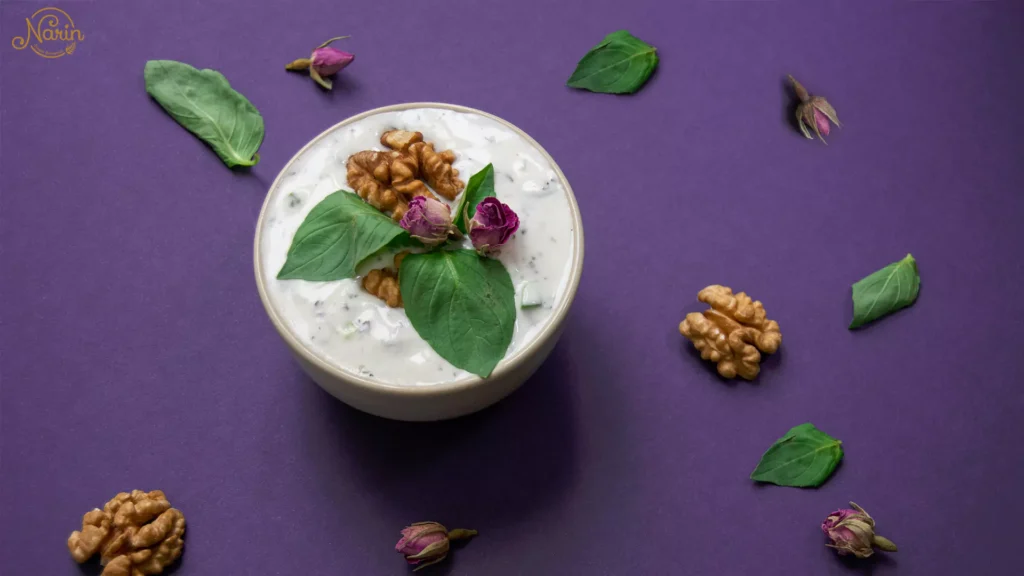
When you are eating rich grilled lamb and warm flatbread, you want something cool and zippy on the side to freshen up your mouth. Mast-o-Khiar mixes thick, creamy yoghurt with finely chopped cucumber and dried mint, sometimes with a few walnuts and sultanas thrown in for crunch. If you love a mellow garlic flavour, Mast-o-Musir uses that same thick yoghurt blended with wild Persian shallots.
For something light and dairy-free, grab a bowl of Salad Shirazi. We dice up firm tomatoes, Lebanese cucumbers, and red onions into tiny little cubes and dress them with sour grape verjuice, olive oil, and dried mint. Most locals spoon this crunchy salad straight onto their hot rice right between bites of meat.
Decoding the Grill: Which Persian Kebabs Should You Pick?
That smell of meat cooking over real charcoal is usually what pulls people in off the street. Looking at the grill section on an Iranian restaurant menu can feel like a bit of a guessing game at first because everything goes by its Farsi name rather than the cut of meat. Once you know which skewer is minced and which one is steak, ordering your main is a breeze.
Quick Skewer Decoder:
Koobideh = Juicy minced lamb & beef (soft texture)
Joojeh = Saffron & lemon chicken (tender & mild)
Barg = Flattened fillet steak (thin & buttery)
Chenjeh = Marinated lamb backstrap cubes (hearty bite)
Vaziri = 1 Koobideh + 1 Joojeh (best all-rounder)
Soltani = 1 Koobideh + 1 Barg (classic red meat combo)
Koobideh vs. Barg vs. Chenjeh: Understanding the Cuts
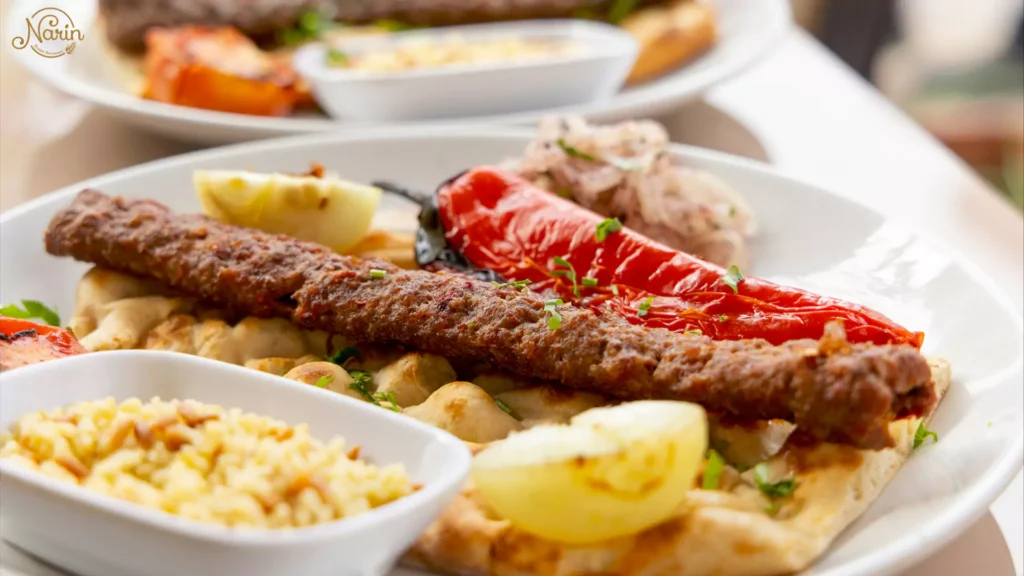
Koobideh is the absolute classic of any Iranian grill house, and it is how locals judge how good a kitchen really is. We mince lamb and beef together with grated onion, press the meat by hand onto wide flat iron skewers, and cook it fast over hot coals. Because all that onion juice stays locked inside the meat while it sears, a good Koobideh comes to your plate super juicy and soft.
Barg is a totally different eating experience. We slice prime beef fillet or lamb backstrap into thin, wide ribbons, tenderise it gently, and soak it in saffron and onion juice so it cooks up like a buttery, thin steak. If you prefer chunkier meat, Chenjeh gives you thick cubes of marinated lamb that eat more like a traditional barbecue skewer. Have a read through our guide to the best Persian kebab in Sydney if you want to see how our grill chefs keep these cuts so tender over open fire.
Joojeh Kebab: The Go-To Poultry Skewer
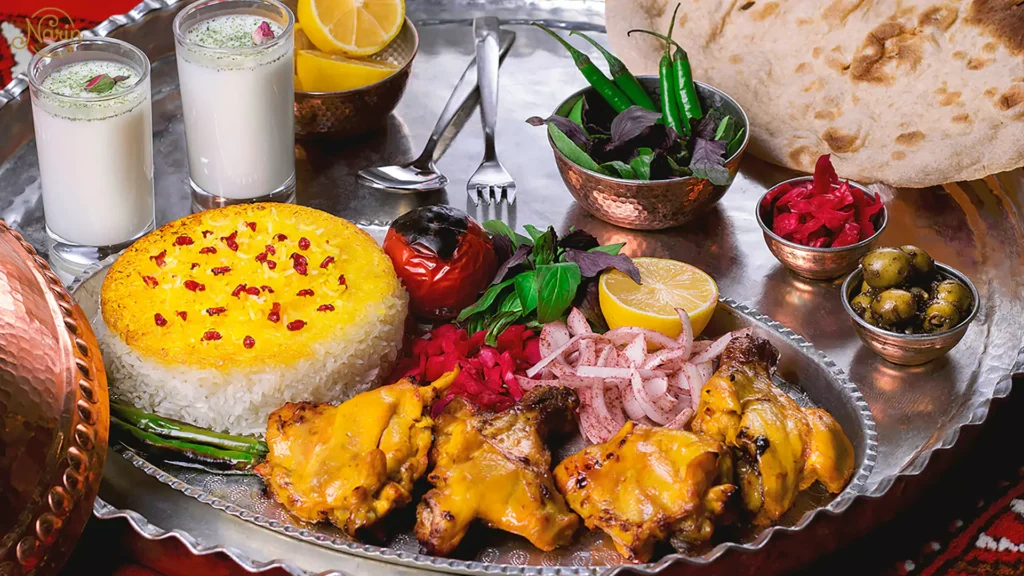
If you are more of a chicken fan or have young kids with you, you cannot go wrong with Joojeh Kebab. We soak chicken breast pieces overnight in a bath of golden saffron, fresh lemon juice, yoghurt, and olive oil. The lemon juice makes the meat melt-in-your-mouth tender while the saffron gives it a bright yellow colour. It lands on your table smoky, juicy, and mild, with a blistered tomato and a wedge of fresh lemon on the side.
Combo Platters: Why Vaziri and Soltani Are Ideal for First-Timers
Nobody wants food envy when someone else’s plate comes out looking amazing. You do not have to pick just one type of meat because our combo plates let you try two skewers at once:
- Vaziri Kebab: Gives you one skewer of juicy minced Koobideh alongside one skewer of golden saffron Joojeh chicken.
- Soltani Kebab: Pairs one skewer of minced Koobideh with one long fillet skewer of tender Barg steak.
- Lamb Kotlet: Pan-fried patties made from minced lamb, grated potato, onion, and spices that come out crispy on the outside and soft in the middle, a bit like a savoury potato cake with meat.
Beyond the Grill: Slow-Cooked Persian Stews (Khoresht)
Skewers always get the spotlight in photos, but ask any Iranian what they actually crave when they miss home cooking and they will tell you it is Khoresht. These traditional stews bubble away on the stove for hours until the meat is soft enough to cut with the side of a spoon. You scoop the thick, rich sauce over a mound of fluffy white rice rather than eating it by itself like a soup.
Ghormeh Sabzi: Iran’s National Herb Stew
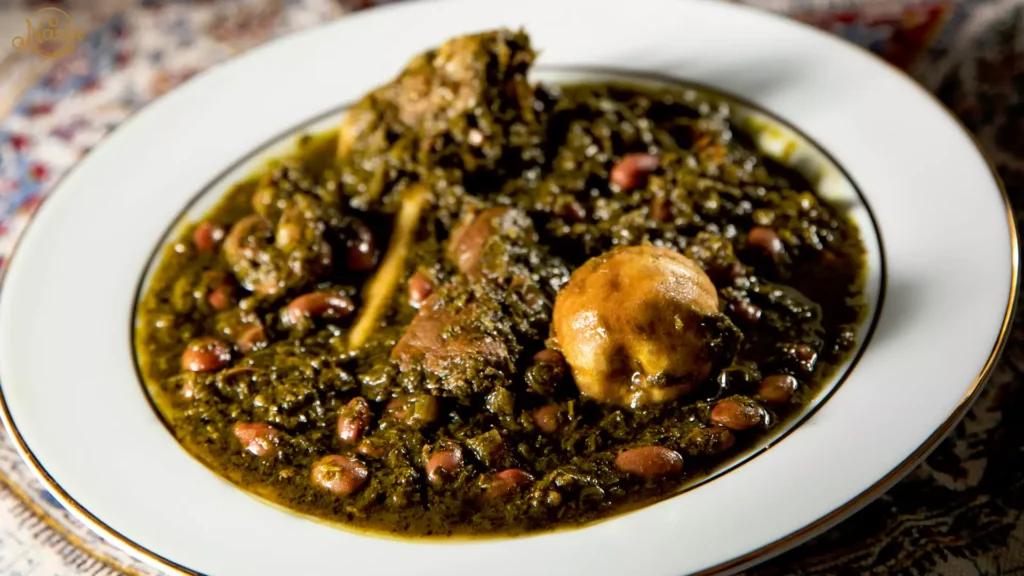
Walk past an Iranian family home on a Sunday afternoon and you are guaranteed to smell Ghormeh Sabzi on the stove. People call it Iran’s national dish for a good reason. We finely chop big bunches of parsley, coriander, chives, and fenugreek leaves, fry them down gently to bring out their earthy aroma, and simmer them for hours with diced lamb, red kidney beans, and whole dried Omani limes (limoo amani).
Poking a fork into those dark dried limes lets out a zesty, slightly sour citrus juice that cuts right through the rich lamb and herbs. If you are hunting for the best Persian dishes that taste like nothing else in Sydney, put a bowl of Ghormeh Sabzi right in the middle of your table.
Fesenjoon and Gheimeh: Rich Walnut and Split Pea Classics
Fesenjoon is the dish that surprises first-timers the most. The dark, velvety sauce has zero flour or cream in it. We make it by grinding toasted walnuts into a fine paste and cooking it slowly with tangy pomegranate molasses and tender chicken. Depending on how each family makes it, Fesenjoon sits somewhere between tart and sweet-and-sour, with a rich nutty texture that reminds some people of a good satay or Mexican mole.
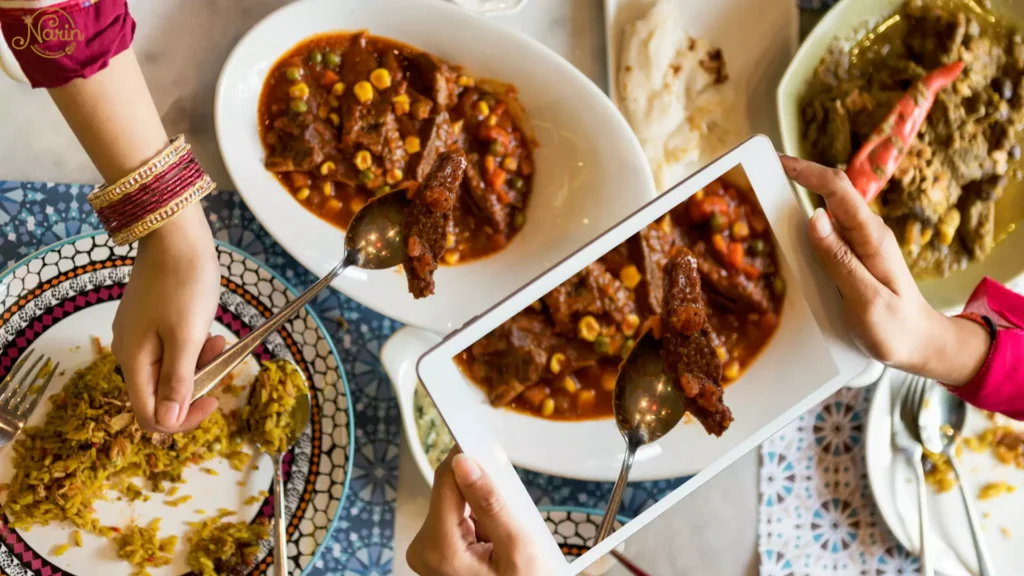
If a walnut and pomegranate stew sounds a bit too out-there for your first dinner, try Khoresht-e Gheimeh instead. It is a super comforting tomato and saffron stew made with soft yellow split peas, tender diced lamb, and dried lime, all topped with a big handful of crunchy shoestring fries right before it leaves the kitchen. Our post on Persian stews breaks down the exact flavours of each pot if you are still tossing up which one to order.
The Art of Persian Rice: Chelow, Polo, and Crispy Tahdig
In an Iranian kitchen, rice is never just an afterthought thrown into a rice cooker. We soak aged Iranian rice in salted water, boil it briefly, drain it, and then steam it slowly with a cloth wrapped under the pot lid so every single grain comes out long, separate, and fluffy.
When you look at the rice section on the menu, you will spot two main words: Chelow and Polo. Chelow is plain steamed white rice topped with a bright yellow stripe of saffron rice, which is what you get next to your kebabs and stews. Polo means the chef has layered delicious extras right through the rice while it steams:
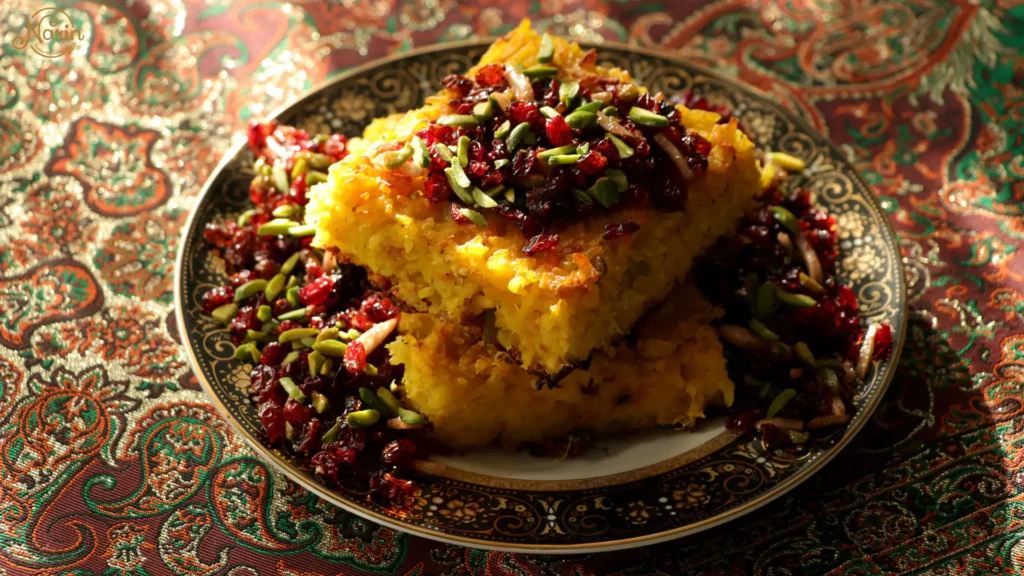
- Zereshk Polo ba Morgh: Fluffy saffron rice scattered with ruby-red barberries (zereshk) that have been quickly tossed in butter and a pinch of sugar, served with a slow-braised chicken leg in a light tomato broth.
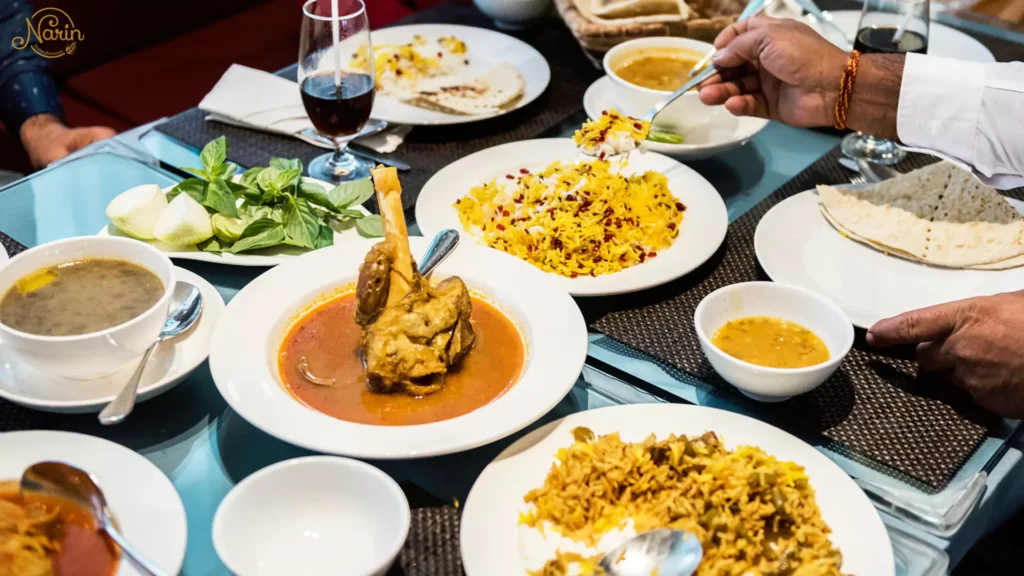
- Baghali Polo ba Mahicheh: Aromatic green rice mixed with fresh dill and broad beans, served alongside a massive slow-cooked lamb shank that falls straight off the bone. If you want to see how our kitchen slow-braises this local favourite, have a read of our post on Baghali Polo and Lamb Shank.
- Tahdig: The famous golden crust of crunchy, buttery rice that forms at the very bottom of the pot. Everyone at the table always fights over the last piece of tahdig, and you can see how we make it in our guide to saffron polo and crispy tahdig.
How to Eat Like a Local: Table Etiquette and Flavour Boosters
When the waiter puts your kebab plate down in front of you, you will see a few little extras sitting near the meat: a whole grilled tomato, a shaker of dark red powder, and maybe some raw onion or fresh herbs. Knowing what to do with them makes the meal ten times better.
Grab your fork, mash that hot blistered tomato straight into your fluffy rice with a little knob of butter, and mix it around so the sweet tomato juices coat the grains. Next, pick up that shaker of red powder. That is sumac, a ground wild berry that tastes bright and lemony without a single bit of chilli heat. Shake a good amount of sumac right over your minced Koobideh or chicken skewer before you dig in. If you ordered a basket of fresh herbs (Sabzi Khordan), tear off a bit of warm bread, wrap it around a piece of meat with a few mint leaves and a slice of radish, and eat it by hand.
Practical Ordering Scenarios: Real-World Meal Plans
With forty different things on the menu, it is pretty easy to get carried away and order way too much food. Iranian servings are huge, and one mound of rice can easily fill up two lighter eaters. Here are three simple ways to order for your table so you get the best variety without wasting food.
Scenario 1: Date Night or Dinner for Two
If both of you order big kebab plates, you end up eating the exact same style of food all night. Split your order between the charcoal grill and the stew pots instead so you can share the best of both worlds:
- Starter: 1 plate of Kashk-e Bademjan (warm eggplant dip) with fresh flatbread.
- Main 1 (The Grill): 1 Vaziri Kebab (gives you one minced Koobideh skewer and one saffron chicken skewer that you can cut in half and share).
- Main 2 (The Stew): 1 bowl of Ghormeh Sabzi (herb and lamb stew) or Fesenjoon (walnut and pomegranate chicken stew) with steamed saffron rice.
- Side: 1 small bowl of Salad Shirazi to keep things fresh.
Scenario 2: A Group of Four Friends Exploring the Menu
Going out with four people is the best way to do an Iranian feast because you can put a bit of everything in the middle of the table and pass the plates around:
- Starters: 1 Kashk-e Bademjan, 1 smoky Mirza Ghasemi, and 1 cool bowl of Mast-o-Khiar (cucumber yoghurt).
- Mains: 1 Soltani Kebab (fillet steak and minced lamb), 1 Joojeh Kebab (saffron chicken), 1 Baghali Polo with the slow-cooked lamb shank, and 1 bowl of Ghormeh Sabzi.
- Drinks & Sweets: A cold jug of minted Doogh for the table, followed by a pot of hot black tea and two bowls of saffron ice cream with four spoons.
Scenario 3: Dining with Kids or Cautious Eaters
If you have little ones at the table or someone in the family who usually sticks to simple meat and three veg, skip the sour limes and tangy whey dips for their plates:
- Starter: Warm flatbread with mild cucumber yoghurt (Mast-o-Khiar).
- Mains: Joojeh Kebab (mild lemon and saffron chicken skewers) with plain white rice, or Lamb Kotlet (crispy pan-fried lamb and potato patties).
- Side: A bowl of hot chips or buttery saffron rice.
Dietary Requirements: Halal, Gluten-Free, and Vegetarian Options
Organising a group dinner in Sydney usually means making sure everyone at the table can actually eat the food. Traditional Iranian cooking is great for mixed groups because we use whole vegetables, plain rice, and pure cuts of meat rather than bottled sauces or flour thickeners.
- Gluten-Free (GF): Since rice is our main side and we thicken our stews with ground walnuts, split peas, or slow-cooked herbs instead of wheat flour, heaps of the menu is naturally gluten-free. At Narin Persian Restaurant, our popular grill plates like the Vaziri Kebab, Chicken Kebab, Chenjeh, Barg, and Soltani are all clearly marked GF on the menu. Just leave the flatbread for the others and double-check with our staff before ordering pan-fried items.
- Halal: Muslim diners can relax and order anything off the menu without worrying. Traditional Iranian recipes never use wine or alcohol in the cooking, and pork is never in the kitchen. Every single cut of meat we serve is certified, traceable halal Persian food in Sydney, using natural pomegranate molasses, lemon, and verjuice for tang.
- Vegetarian & Vegan: While the charcoal grill is all about meat, plant-based eaters have plenty to choose from. You can put together a great spread with Mirza Ghasemi (just ask for no egg to make it vegan), Ash Reshteh noodle soup, Salad Shirazi, dill and broad bean rice, and veggie versions of our stews if you let the kitchen know.
Traditional Drinks and Desserts to Finish Your Meal
Guzzling a sweet fizzy soft drink with charcoal-grilled lamb tends to drown out the delicate saffron and herb flavours. If you want to drink like an Iranian local, order a cold glass of Doogh. It is a traditional savoury yoghurt drink whisked with chilled water, a pinch of salt, and dried mint. It tastes salty, tangy, and super refreshing next to rich meat, and it really helps settle your stomach after a big feed.
Once the main plates are cleared away, ask for a pot of freshly brewed Persian Tea (Chai). We pour it black into small glass cups without milk, so you get the lovely warm scent of cardamom and bergamot. Have your hot tea alongside one of these traditional sweets:
- Bastani Sonnati: House-made Persian ice cream coloured bright gold with saffron, scented with rosewater, and packed with little chunks of frozen cream and crunchy pistachios.
- Sholeh Zard: A smooth, dairy-free saffron rice pudding dusted with cinnamon, slivered almonds, and pistachios. Have a look at our guide to Persian ice cream and desserts if you want to see how we make them from scratch.
Experience Authentic Persian Hospitality in Sydney at Narin
Once you have a rough idea of what to order at a Persian restaurant, you can put the menu down, relax with your friends, and enjoy passing the platters around the table. Whether you are scooping up smoky eggplant dip with hot bread, splitting a Vaziri combo off the charcoal grill, or pouring rich Ghormeh Sabzi over crunchy tahdig, Iranian food is always better when you share it with good company.
If you are out in Western Sydney and feel like trying proper home-style Iranian cooking made from scratch, come grab a table with us at Narin Restaurant. You will find us at 14/2B Campbell Street in Northmead, just a quick drive from the Parramatta CBD, where our family has been looking after local diners since 2017. You can check out our full Iranian restaurant menu before you head in, read a bit more about our Persian restaurant near Parramatta, or chat with us about Persian catering in Sydney if you have a birthday or family party coming up.
Pop in for lunch or dinner between Wednesday and Monday from 12:00 PM to 9:00 PM, or give us a quick ring on (02) 9686 6037 to book a table for your crew.
FAQs about What to Order at Persian Restaurant
1. Is Persian food spicy?
Not at all. Traditional Iranian food does not use hot chillies to burn your tongue. All the flavour comes from fresh green herbs, saffron, garlic, turmeric, and tangy fruits like dried limes, barberries, and pomegranates. Anyone who avoids spicy food can eat comfortably here.
2. What is the safest dish for a picky eater at an Iranian restaurant?
Go straight for the Joojeh Kebab (boneless saffron and lemon chicken skewer) with plain steamed basmati rice. The flavours are bright, mild, and super familiar, tasting a lot like a really tender lemon-herb roast chicken.
3. What is the difference between Koobideh and Barg kebab?
Koobideh is made from minced lamb and beef mixed with grated onion, pressed onto a flat skewer, and cooked over coals until juicy and soft. Barg is thin-sliced beef fillet or lamb backstrap marinated in saffron and onion juice, so it eats like a tender, flat steak. If you want both on one plate, grab the Soltani Kebab.
4. How much food should two people order at a Persian restaurant?
The servings at Iranian restaurants are pretty big, especially the rice plates. For two people, one shared dip like Kashk-e Bademjan and two main dishes (say, one kebab platter and one stew) will easily fill you both up, often with a container of leftovers for lunch the next day.
5. What is that red powder on the table at Persian restaurants?
That dark red spice in the shaker is sumac. It is made from dried, ground wild berries and gives a lovely lemony tang without any heat. Locals shake heaps of it over their kebabs, rice, and grilled tomatoes to cut through the rich meat.